Plant Identification
Plant Identification
In this module, you’ll learn how to tell which plants stay on a utility right-of-way and which do not, and how to look at a plant so you can find out what it is.
Learning objectives
After completing this module, you will be able to:
- Explain what makes a plant compatible or incompatible.
- Tell a woody plant from an herbaceous one.
- Describe a leaf by its arrangement and its type.
- Use a plant ID app and a field guide to check a plant.

Where it grows matters
Many utilities manage a transmission right-of-way as two zones. The same shrub can be fine in one and a problem in the other.
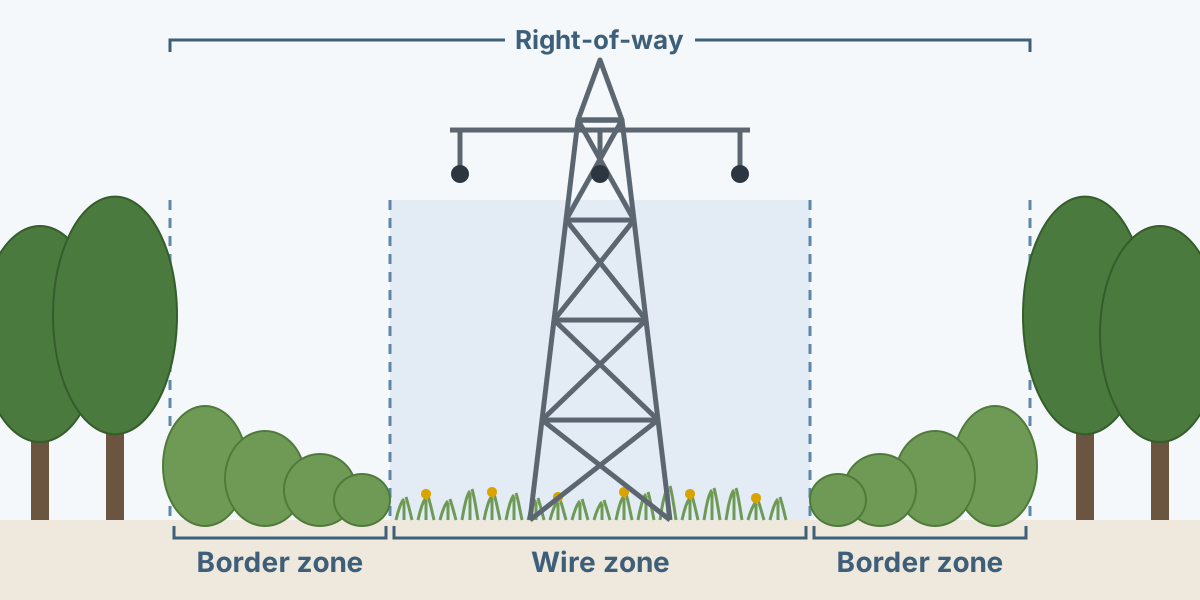
- Wire zone. The middle of the right-of-way, under the wires. Plants here stay low when fully grown, within the height limit your company’s guidelines set.
- Border zone. The strips along both edges. Taller shrubs that will not interfere with the line can stay, such as American hazelnut.
Incompatible woody species are removed from both zones.
The zone rating
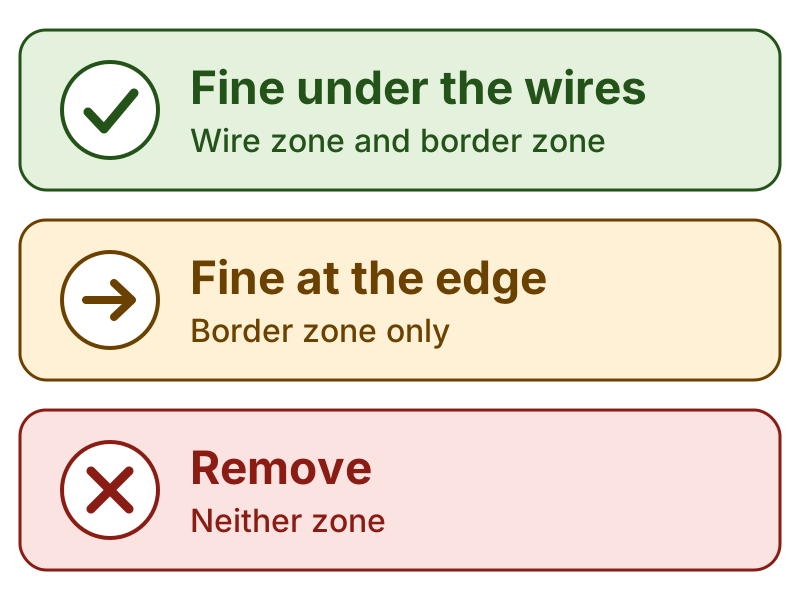
A field guide or plant ID app often rates each woody plant for where it can grow on the right-of-way. This module uses three ratings.
- Fine under the wires. Stays low enough for the wire zone. It can also stay in the border zone.
- Fine at the edge. Suits the border zone only. In the wire zone, it is removed.
- Remove. Incompatible in both zones.
You do not need to memorize a rating. Look it up in the field guide or the app.
Woody and herbaceous plants
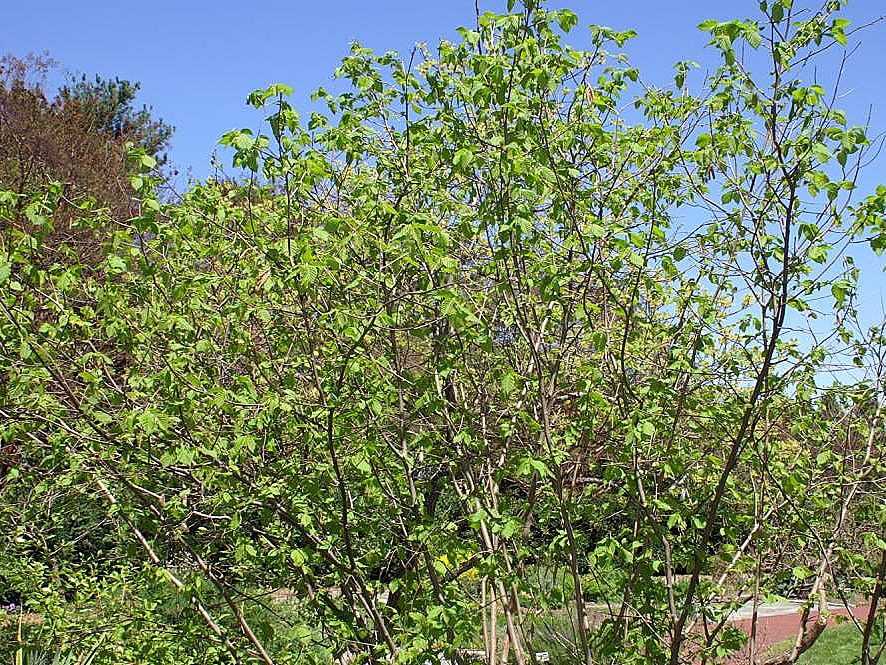
Woody
The stem is stiff and covered in bark. It stays alive above ground through the winter. Trees and shrubs are woody.
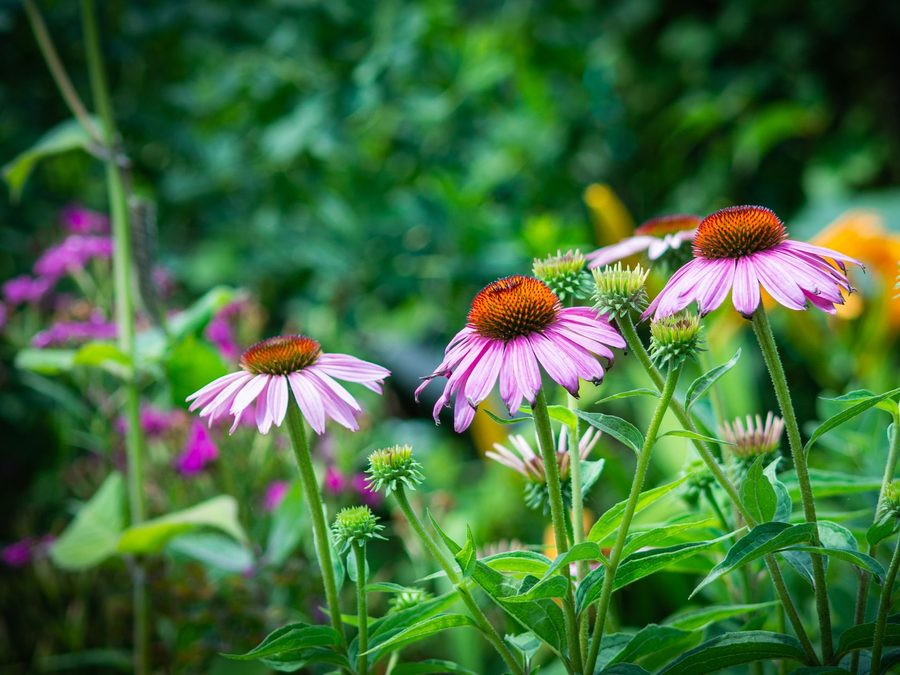
Herbaceous
The stem is soft, bends easily and has no bark. The part above ground usually dies back each year. Grasses and forbs are herbaceous.
A young woody plant can look herbaceous when it is small. Check the stem for bark.
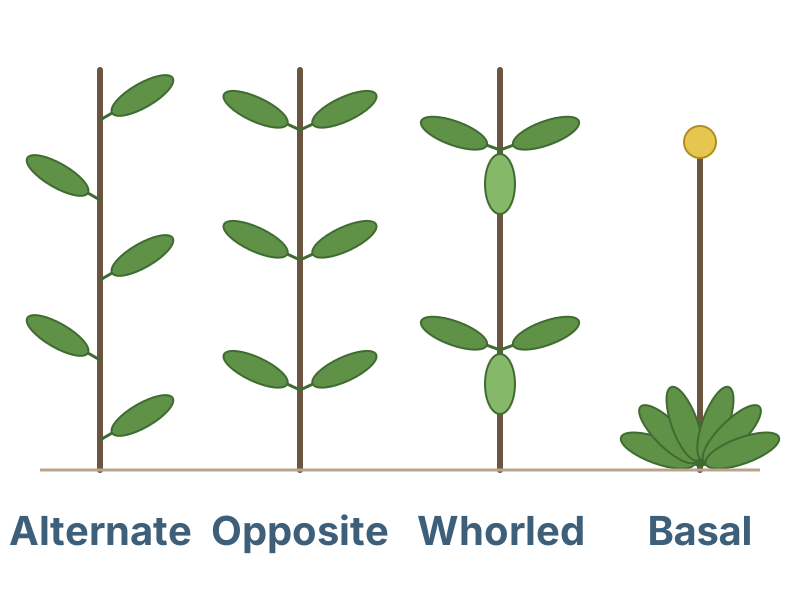
How the leaves sit on the stem
Next, look at how the leaves are arranged.
- Alternate. One leaf at a time, staggered up the stem.
- Opposite. Two leaves at the same point, straight across from each other.
- Whorled. Three or more leaves around the same point.
- Basal. Leaves that come from the base of the plant.
The arrangement shows in the buds and twigs too, so it still helps after the leaves have dropped.
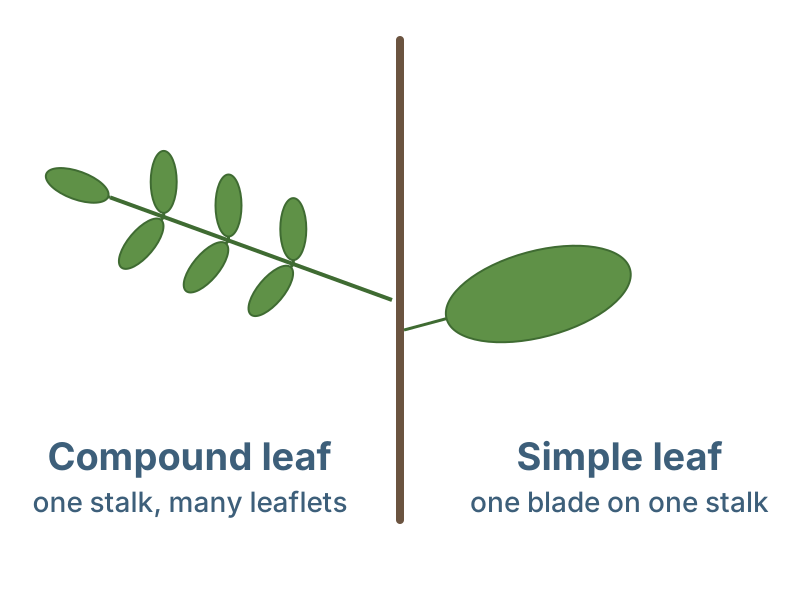
Simple and compound leaves
Now look at a single leaf.
- Simple leaf. One blade on one stalk.
- Compound leaf. Several small blades, called leaflets, on one stalk.
A compound leaf can look like a twig with many small leaves. Count it as one leaf.
Four leaf types
Many field guides sort woody plants by leaf type. If you know the type, you know where to look.
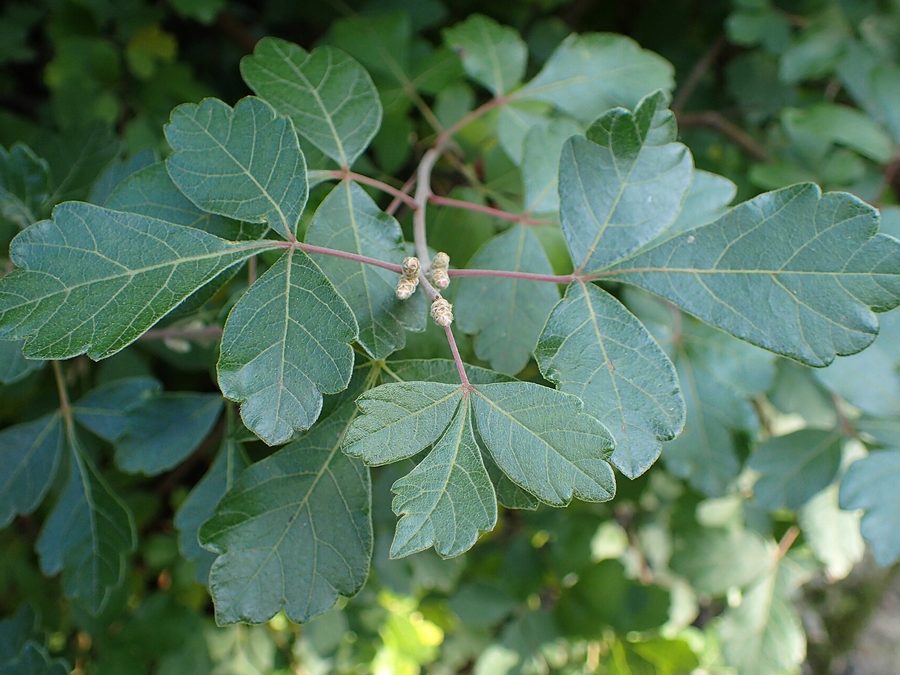
Compound
Several leaflets on one stalk.
Entire
A simple leaf with a smooth edge.
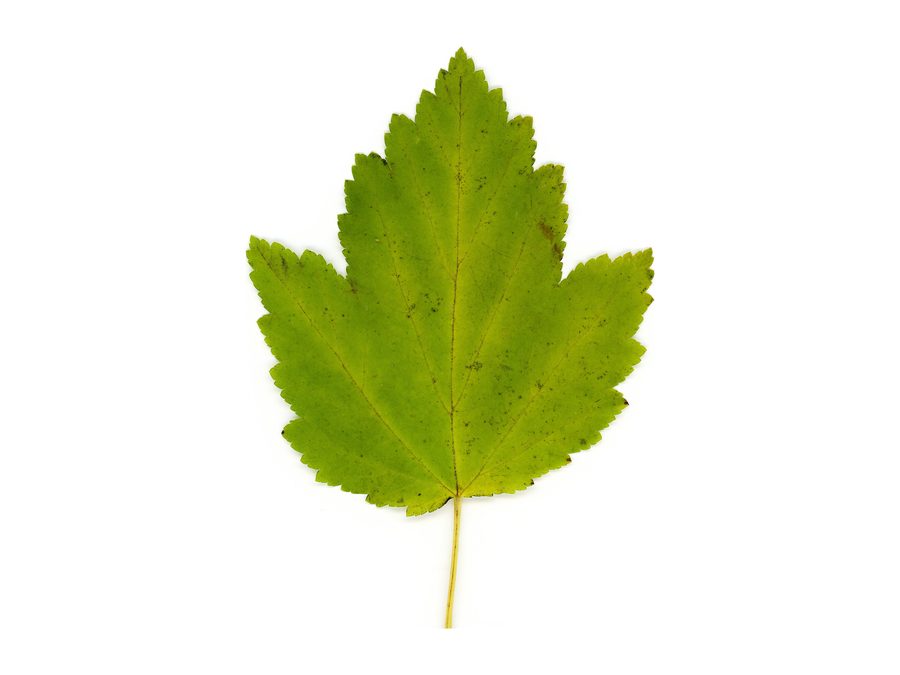
Lobed
A simple leaf with an edge cut into sections.
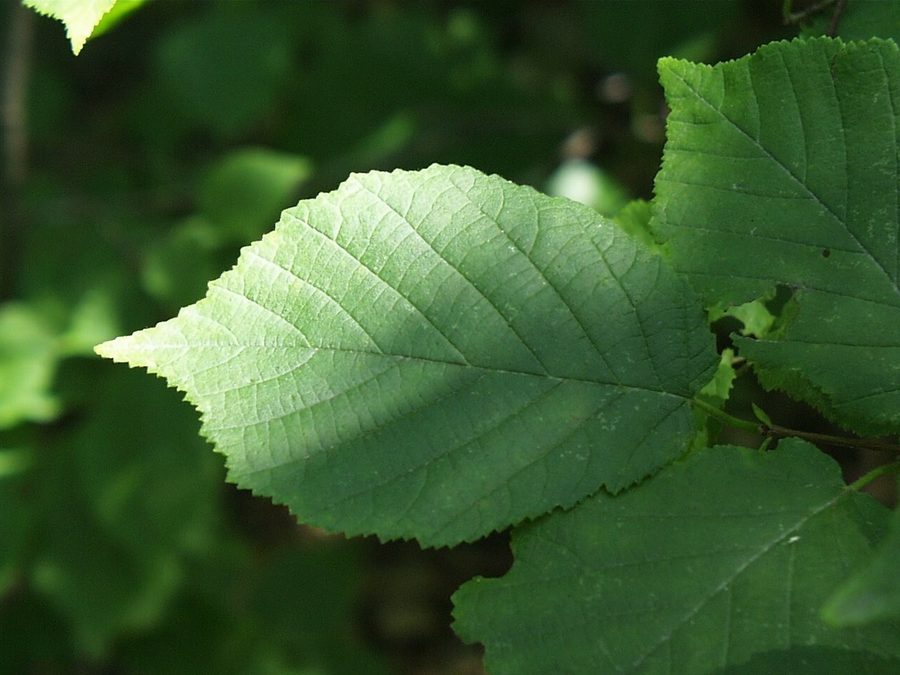
Toothed
A simple leaf with small points along the edge, like a saw.
Three shrubs to leave
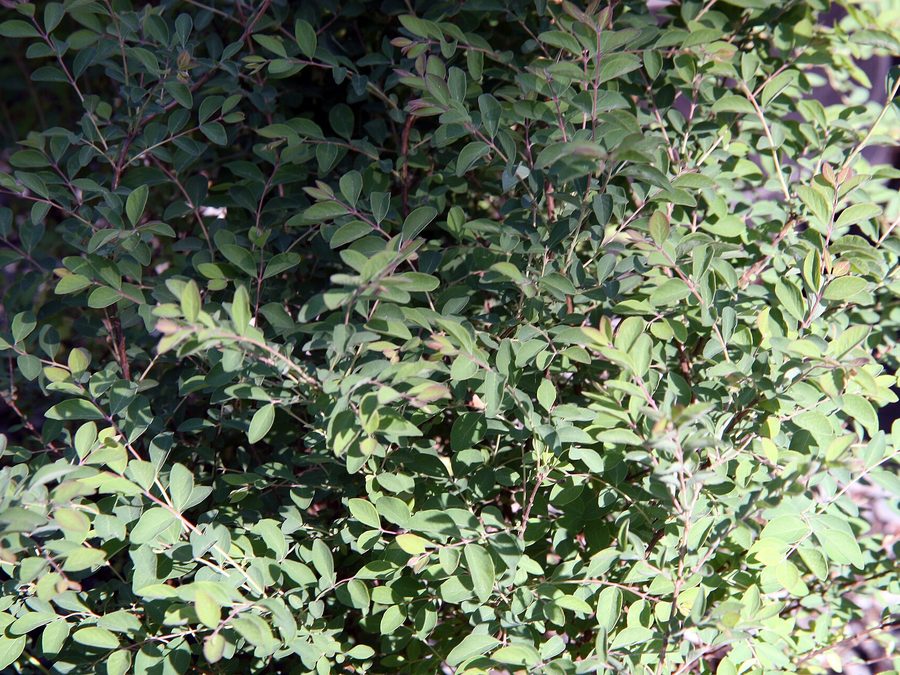
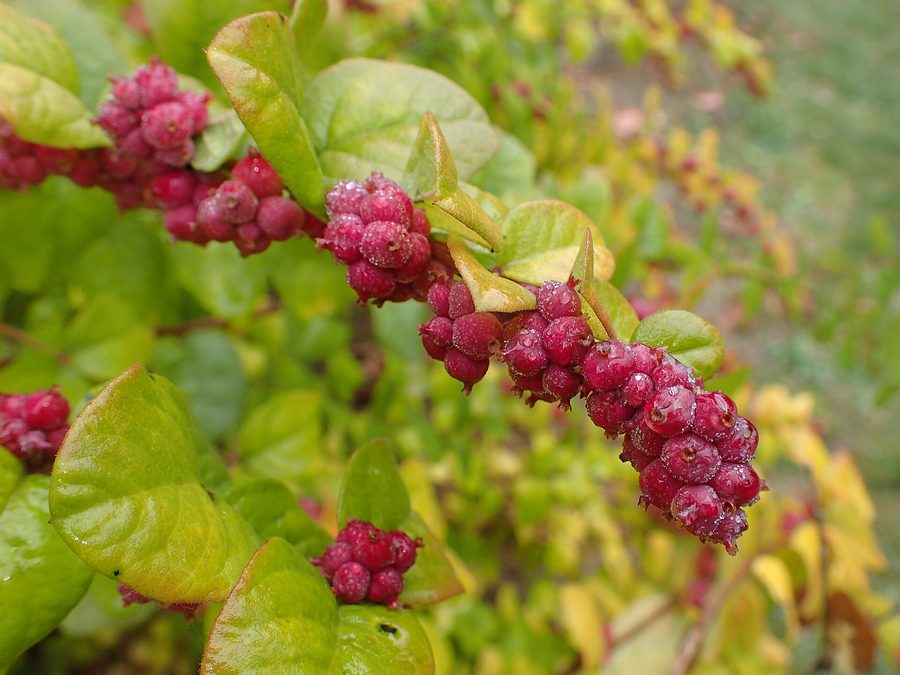
Buckbrush
Also called coralberry. A low, spreading shrub, 2 to 5 feet tall, with small oval leaves and reddish-purple berries.
Fine at the edge
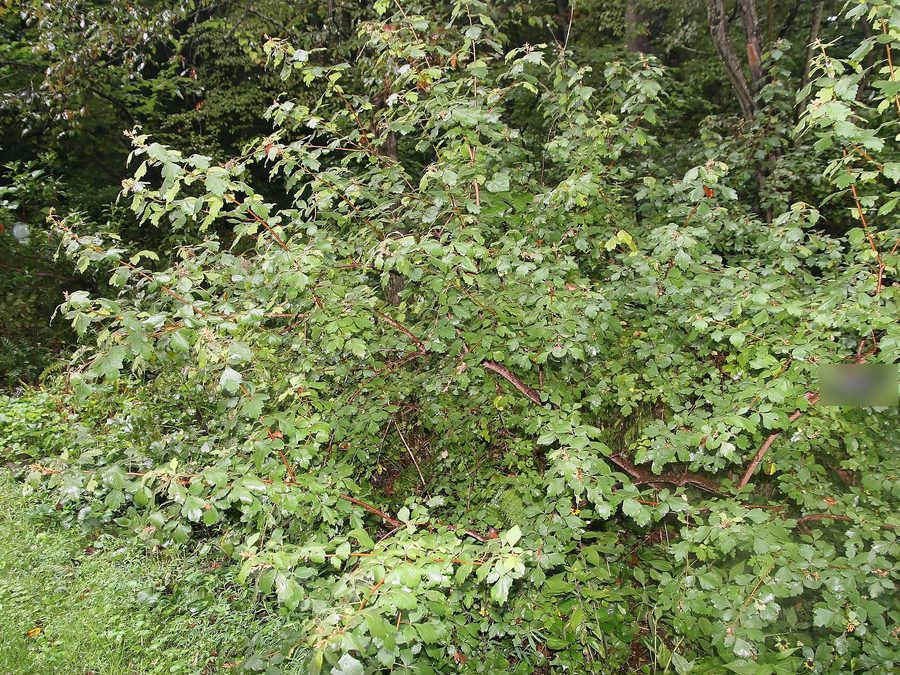
Fragrant sumac
A low, spreading shrub, 2 to 6 feet tall. Each leaf has three leaflets, which smell of lemon when crushed.
Fine at the edge
American hazelnut
A shrub 8 to 15 feet tall, with oval, toothed leaves that feel slightly fuzzy.
Fine at the edge
Three plants to remove
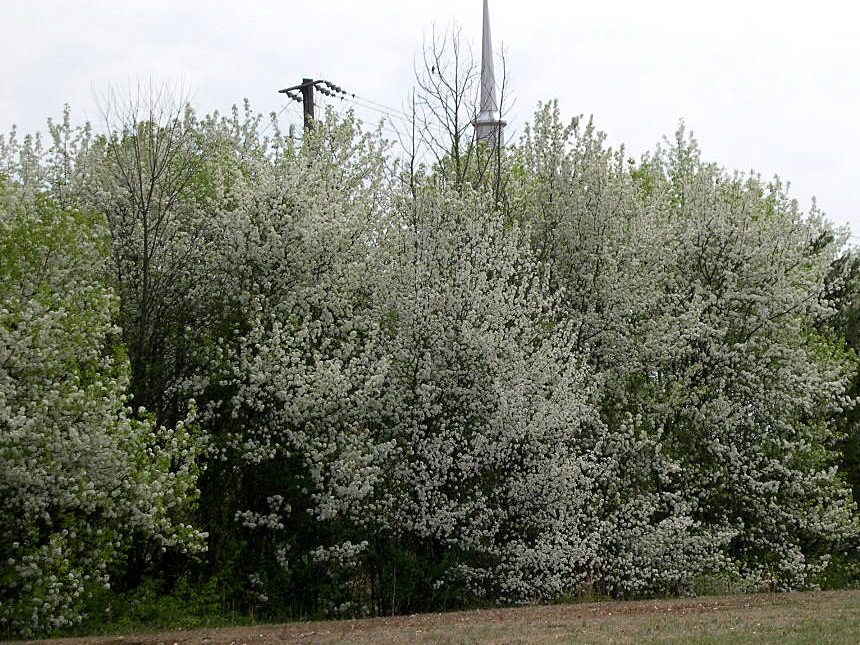
Bradford pear
A tree 20 to 40 feet tall, with shiny leaves and white flowers in spring before the leaves come out.
Remove
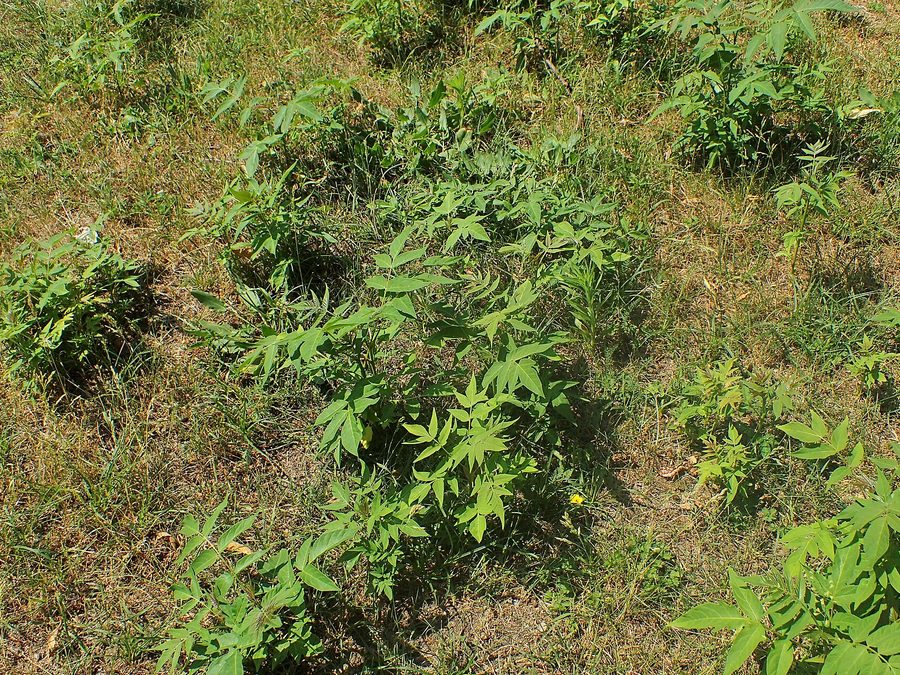
Tree of heaven
A fast-growing tree, 40 to 60 feet tall, with long compound leaves. Cut it and new shoots come up from the roots.
Remove
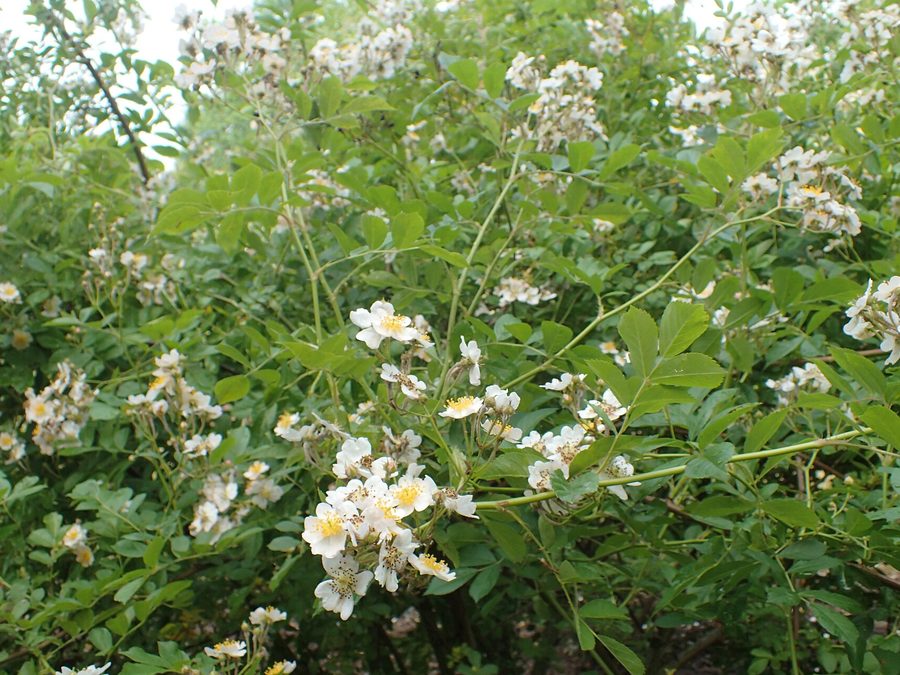
Multiflora rose
A shrub that forms thickets you cannot walk through, with compound leaves and small white to pink flowers.
Remove
A plant ID app
Many utilities give crews and planners a plant identification app for the field. An app like this can help you identify a plant, see how it can be treated and check whether it suits the wire zone or border zone.
If your company uses one, have it on your phone and be signed in before your first field session. Your supervisor or trainer can help you set it up.

The field guide
A plant field guide usually gives each plant its own page or card, with photos of the whole plant, the leaf, the flower and the fruit.
- Leaf type. Where the plant sits in the guide.
- Zone rating. Whether it suits the wire zone, the border zone or neither.
- Height and spread. How big it gets when fully grown.
Learn where these sit on a page in your company’s guide, so you can find them quickly in the field.
What comes next for you
Your next step is a field session with a trainer. You will look at real plants and practice what you learned here.
- Bring your phone, with your plant ID app set up if your company uses one.
- Look at the whole plant first, then the leaf.
- Ask about anything you cannot name.
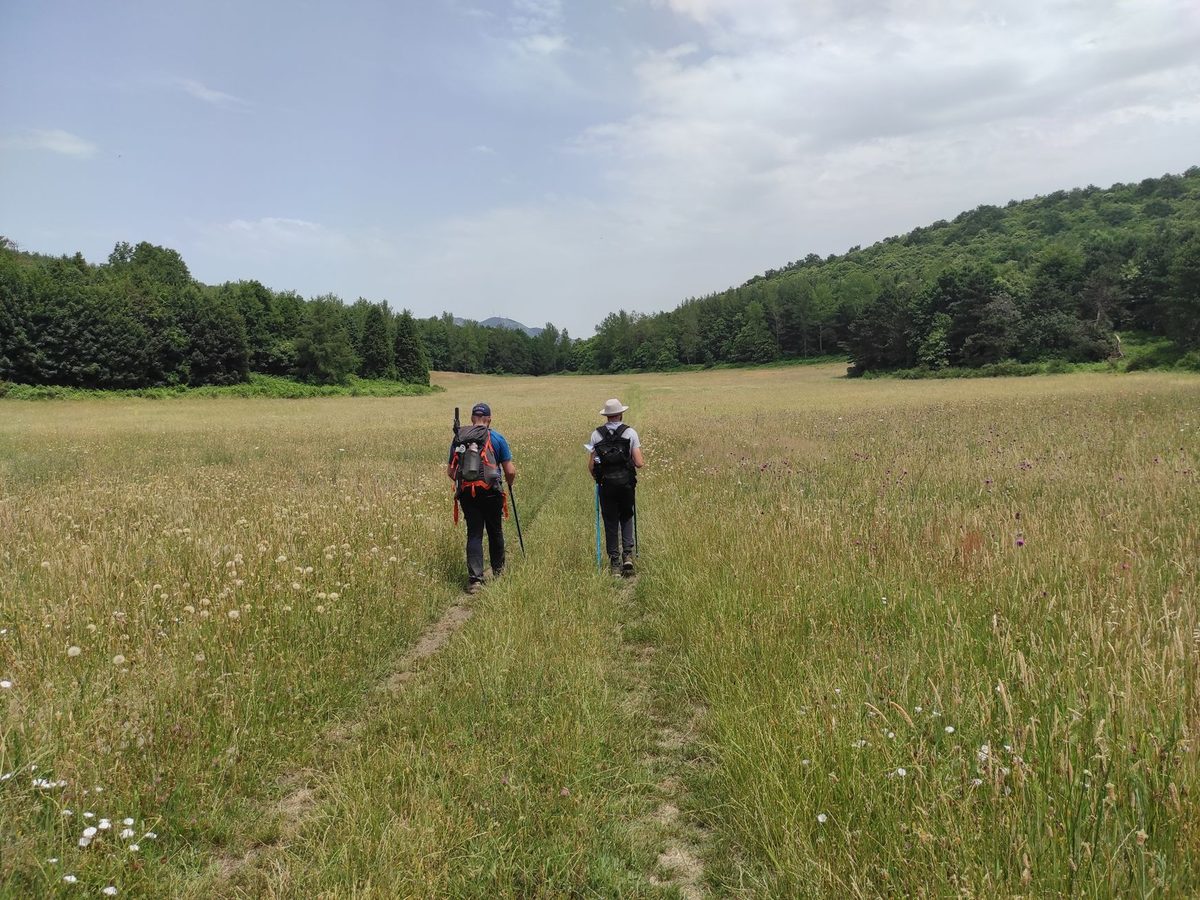
Here are the main ideas from this module.
Key point 1 of 4Keep or remove
Compatible plants stay low enough for the place they grow, and they compete with tall-growing trees. Incompatible plants are removed. In the wire zone, plants stay low when fully grown.
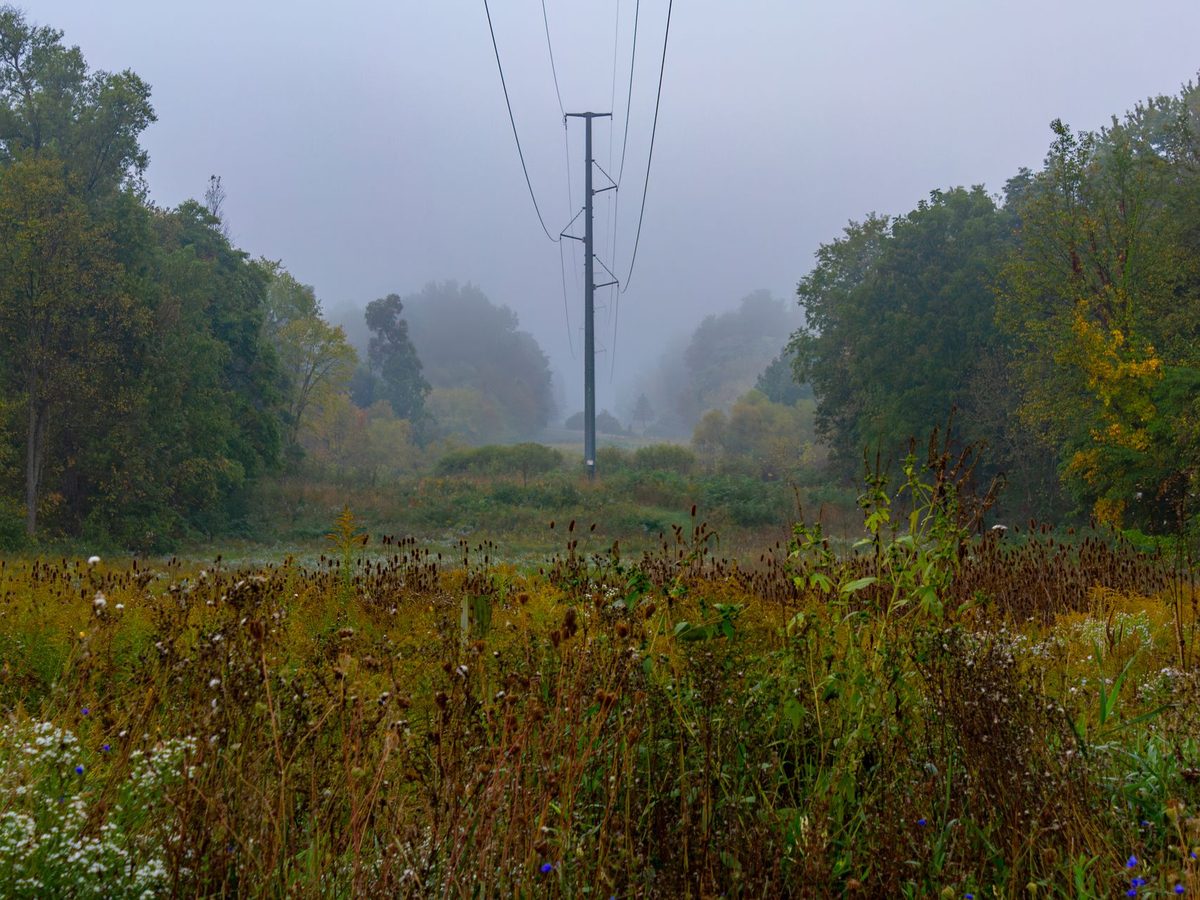
Start with the whole plant
A woody plant has a stiff stem with bark that lives through the winter. An herbaceous plant has a soft stem that usually dies back each year.
Then read the leaf
Look at how the leaves sit on the stem, then at one leaf. Many field guides sort woody plants into compound, entire, lobed and toothed.
Check before you act
Use your plant ID app and field guide to check a plant and its zone rating. If you are still not sure, stop and ask your supervisor.