American Hazelnut
vs Black Cherry
One stays a 10-ft shrub for life. The other races to 60 feet — and re-sprouts from every cut stump.
Why They're Easily Confused
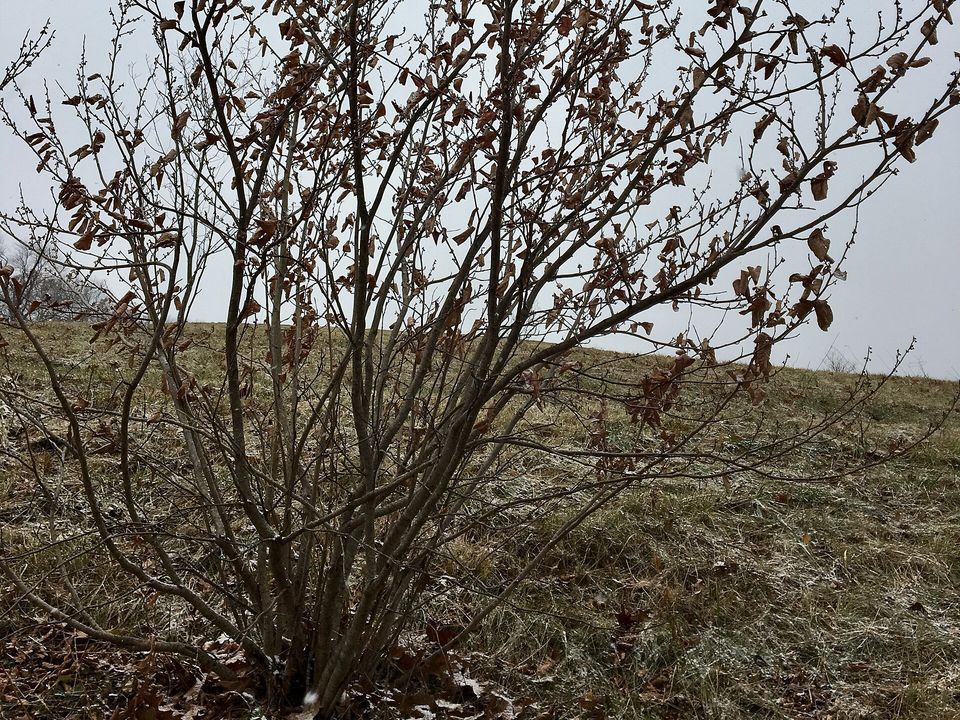
 Hazelnut
stays under 10 ft
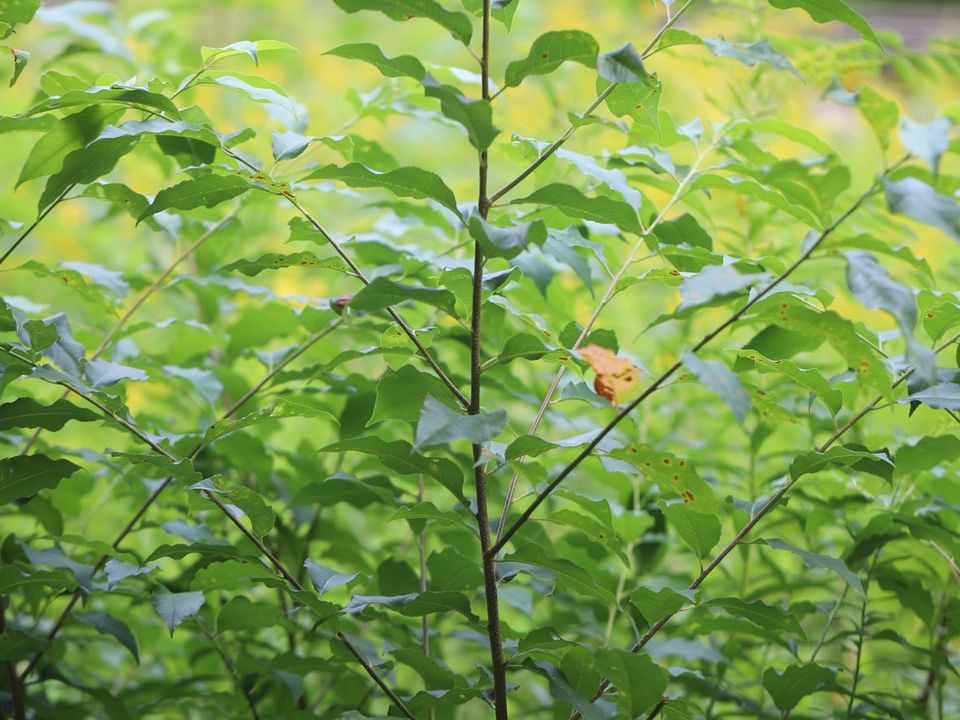
 Black Cherry
grows to 60+ ft
Both have toothed simple alternate leaves and can look like multi-stem shrubs at sapling stage. Cherry sucker-clumps off cut stumps and root suckers, doubling the confusion.
American Hazelnut is a forever-compatible shrub — max 10 ft, multi-stem clump for life.
Black Cherry is a 60–80 ft fast-growing target with a single dominant leader, even on suckers.
Form & habit
Hazelnut
multi-stem clump, max 10 ft
Black Cherry
single leader, 60–80 ft
Hazelnut grows as a multi-stem clump from a single base — several upright stems for life, max 10 ft. Even mature plants stay clumped.
Black Cherry has a single dominant leader, even on stump suckers — one stem outgrows the rest fast. Reaches 60–80 ft.

A cherry stump-sucker still has one stem outpacing the rest within a season.
Leaves
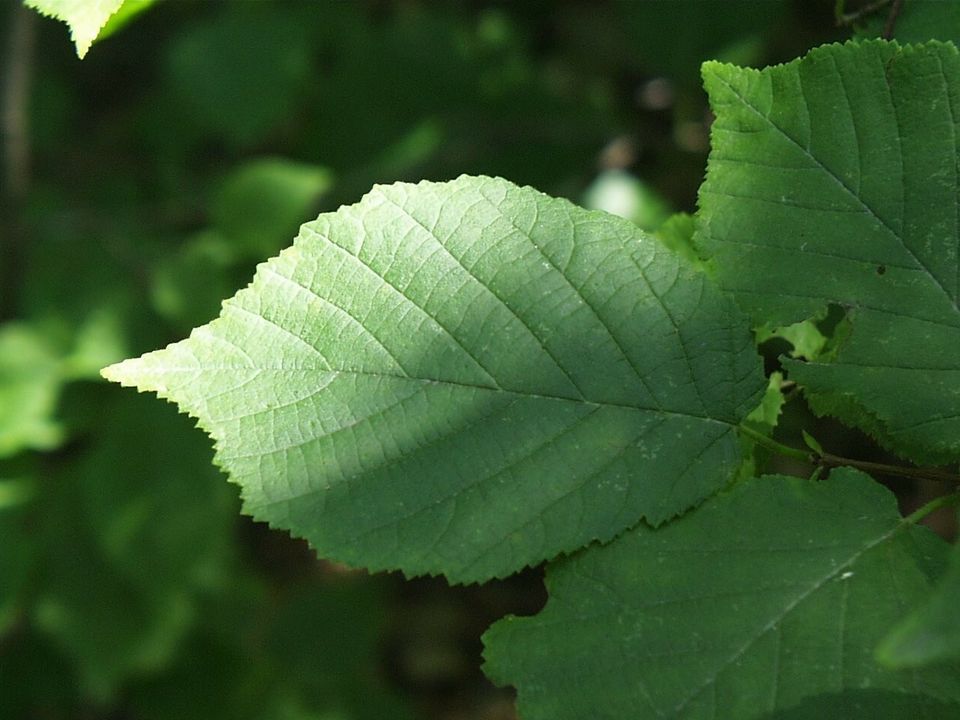 Hazelnut
broad oval, matte, doubly serrate
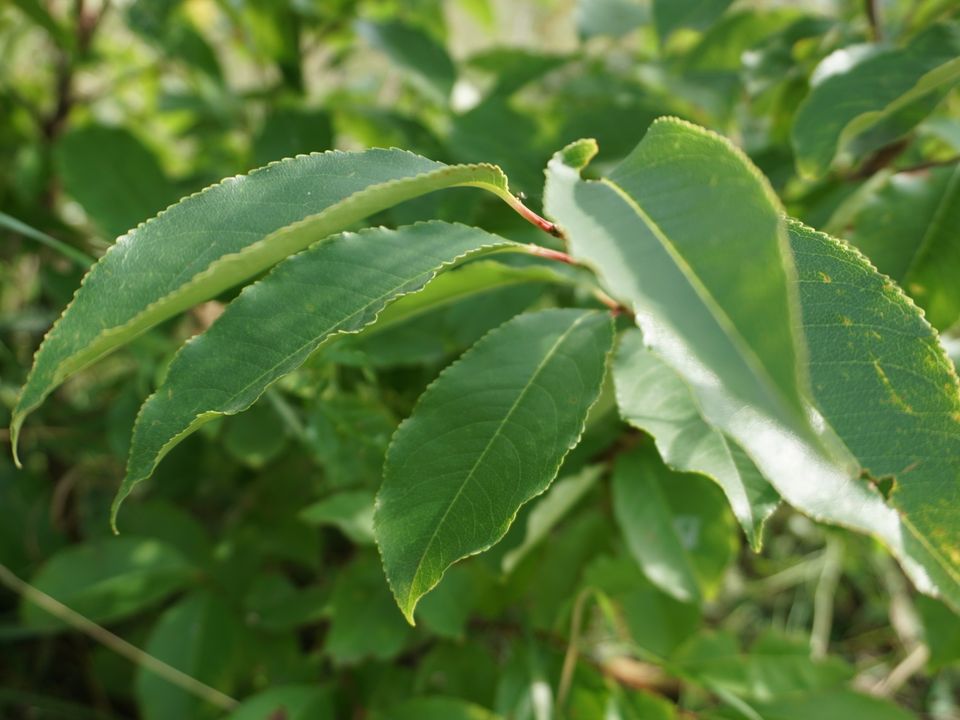 Black Cherry
narrow oblong, glossy
Hazelnut leaves are broadly oval, matte green, and doubly serrate — every saw-tooth has tiny saw-teeth on it. Hairy underside.
Black Cherry leaves are narrow oblong, glossy dark green, simply serrate — single row of fine teeth. Look for rusty hairs along the midrib on the underside.
Bark & fruit
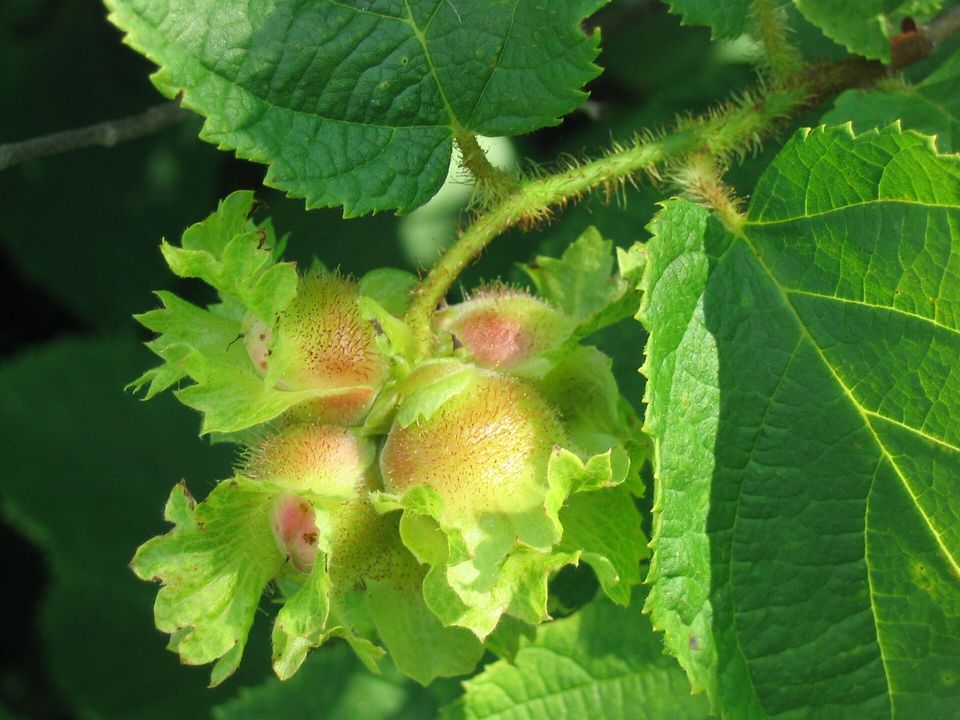 Hazelnut
frilly papery nut bracts
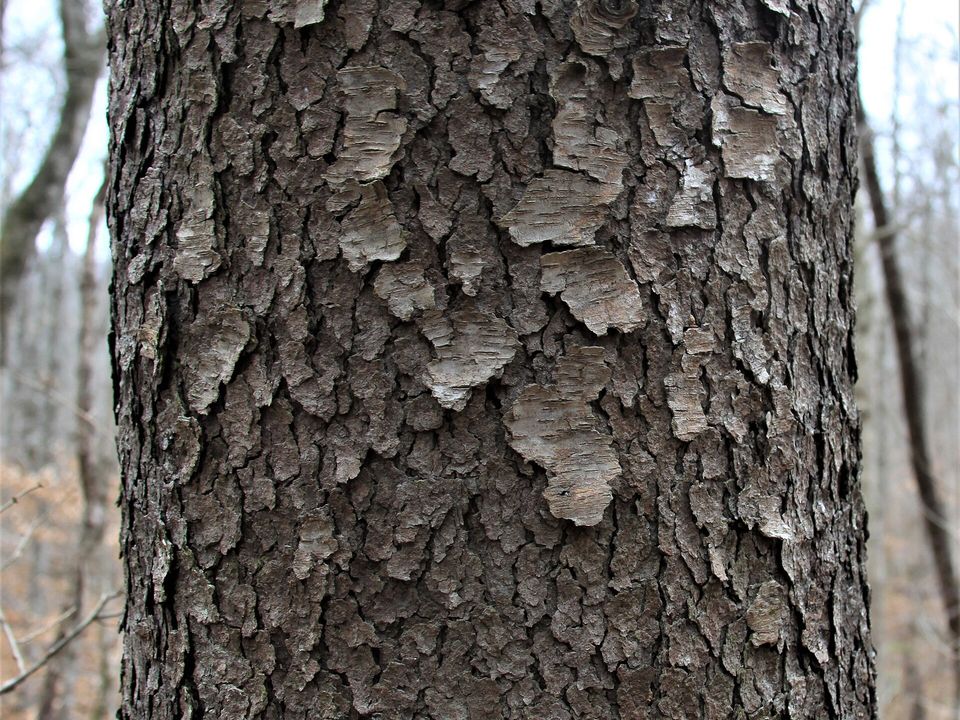 Black Cherry
"burnt cornflakes" bark
Hazelnut nuts sit inside frilly papery bracts in late summer; bark stays smooth gray for life. Winter twigs carry dangling male catkins.
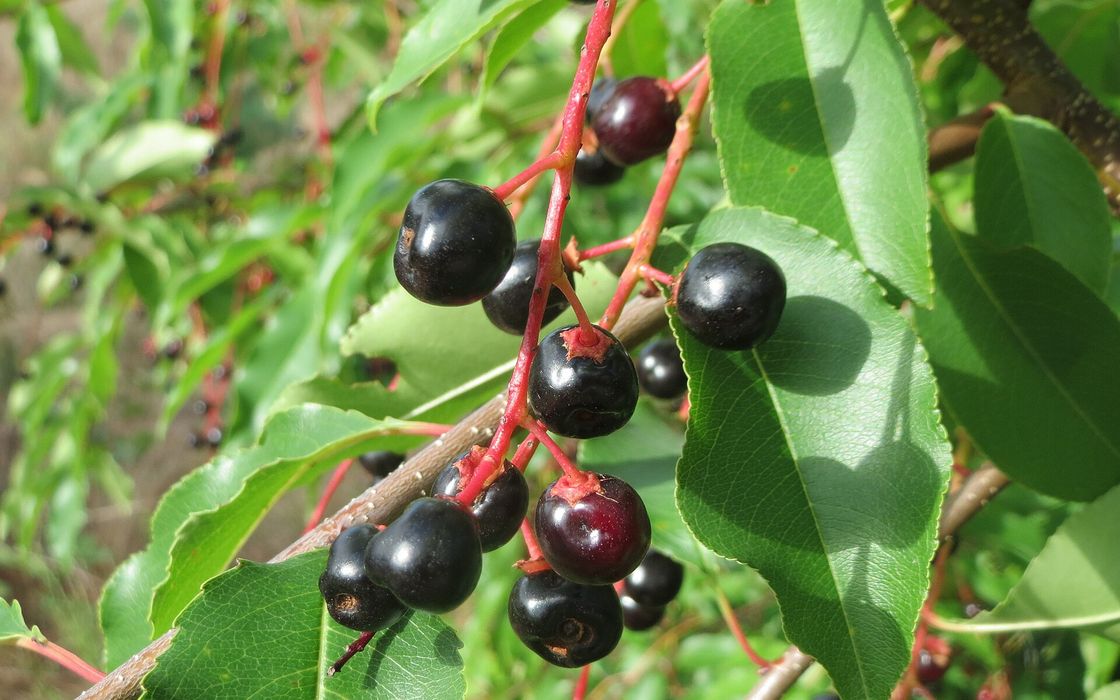
Black Cherry develops the diagnostic "burnt cornflakes" bark — dark red-brown plates curling at the edges — once stems hit ~6″ diameter. Summer drupes hang in dark red-black drooping clusters.
The cornflakes bark is a year-round cue once it's set in — works even on bare-stem winter saplings.
 Quick check
Late August. 6 ft multi-stem clump directly under the wire, several upright stems from one base. Smooth gray bark. Distinctive frilly papery bracts wrapping clusters of green nuts.
Keep or treat?
A. Keep
B. Treat
Quick check
Mid-July. 8 ft sapling at the wood edge, ~10 ft off centerline. Single dominant stem outpacing a few low side shoots. Glossy dark green narrow-oblong leaves. Drooping clusters of dark red-black drupes.
Keep or treat?
A. Keep
B. Treat
Quick check
February survey. 12 ft sapling, single bare stem, no leaves or fruit visible. Lower trunk bark cracking into "burnt cornflakes" plates — dark red-brown fragments curling at the edges.
What's the right call?
A. Keep
B. Treat

Almost there
Answer all three checks and your score appears here.