Ozark Buckbrush
vs Multiflora Rose
Both form low rangy thickets at line edges. From 30 feet, you can't tell them apart. Get close.
Why They're Easily Confused
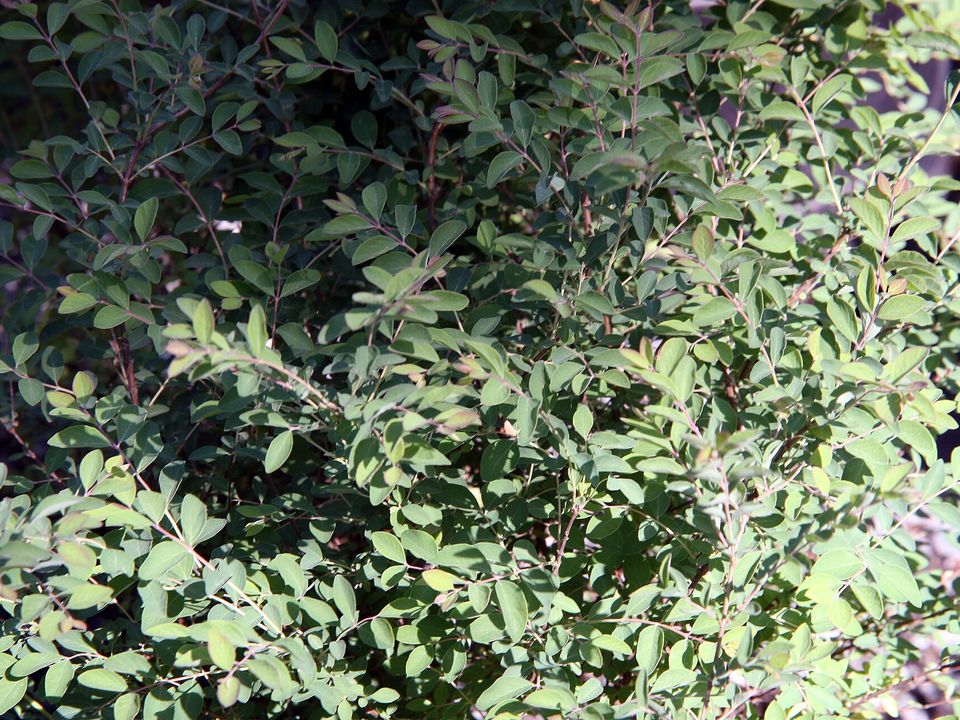
 Buckbrush
stays under 5 ft, native
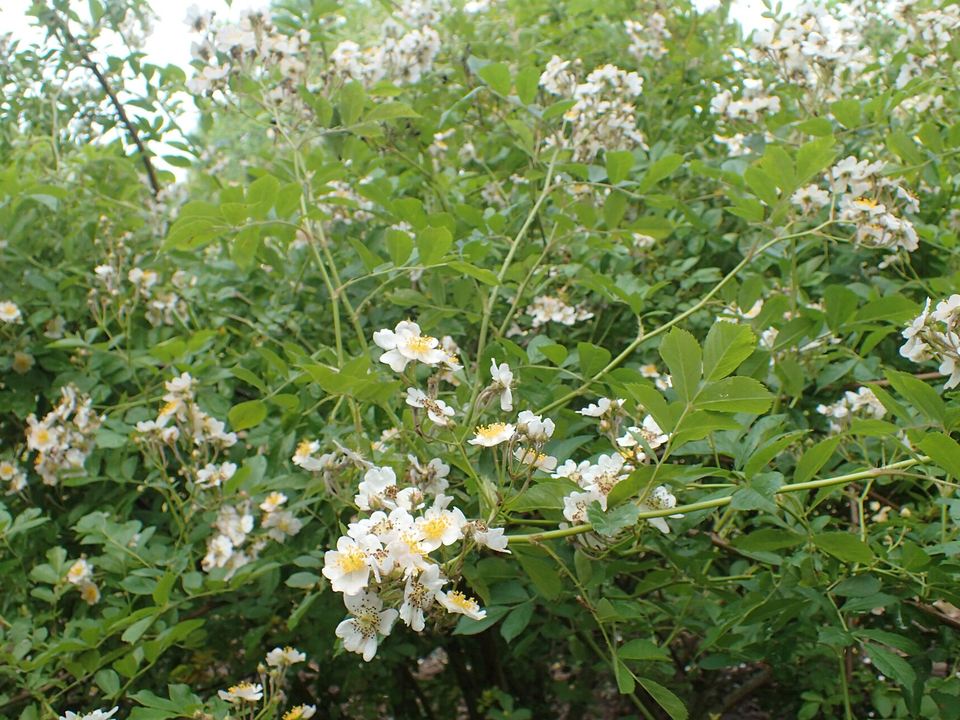
 Multiflora Rose
thorny invasive
Both spread by runners, both form low rangy thickets at ROW edges, both top out as “mid-height shrubs.” From 30 ft away, the silhouettes are nearly identical.
Ozark Buckbrush is a forever-compatible native — max 5 ft, smooth-stemmed, with coral-pink berry clusters in fall.
Multiflora Rose is a notorious invasive — 6–13 ft thorny mounds that smother ROW edges and reseed aggressively.
Habit
Buckbrush
low spreading, 2–5 ft
Multiflora Rose
arching mound, 6–13 ft
Buckbrush is a low spreading shrub from a runner-network — rarely past 5 ft, often closer to 3.
Multiflora Rose grows into a mounding tangle of arching canes, easily 6–10 ft and reaching 13 ft on good sites. Smothers anything beneath it.

Height alone isn't enough — both can look like 4 ft shrubs at first glance.
Leaves
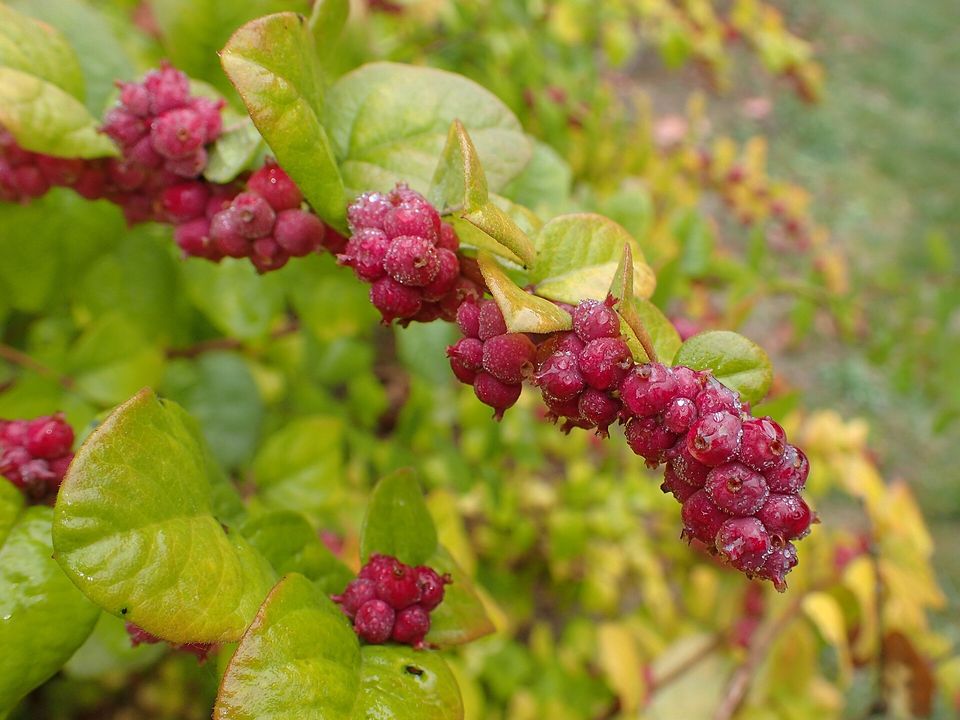 Buckbrush
simple opposite ovals, smooth edge
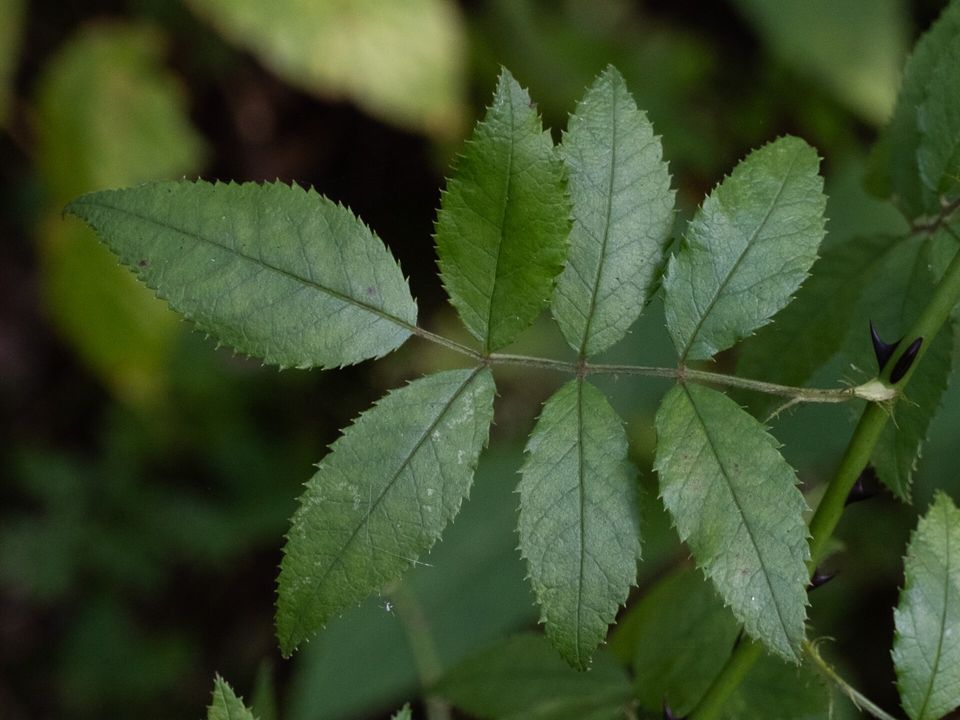 Multiflora Rose
compound, 5–9 toothed leaflets
Buckbrush leaves are simple, opposite, oval, with smooth (entire) margins — no teeth at all.
Multiflora Rose has pinnate compound leaves — 5 to 9 small toothed leaflets along a single stalk — plus fringed (comb-like) stipules at the base of each petiole. The fringed stipule is the give-away.
Stems & thorns
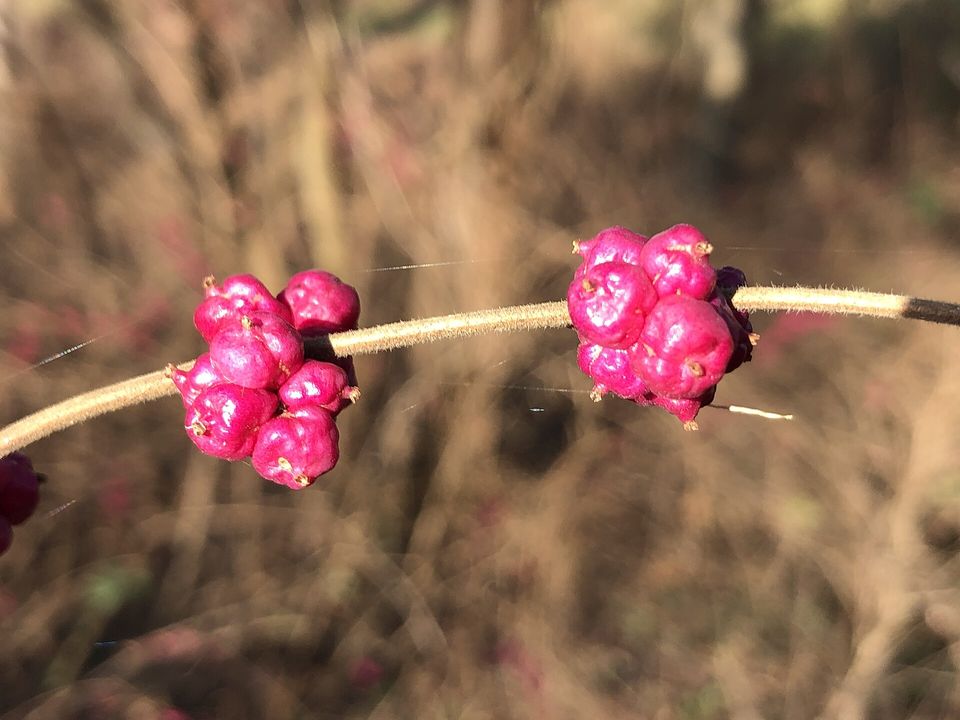 Buckbrush
smooth, thornless
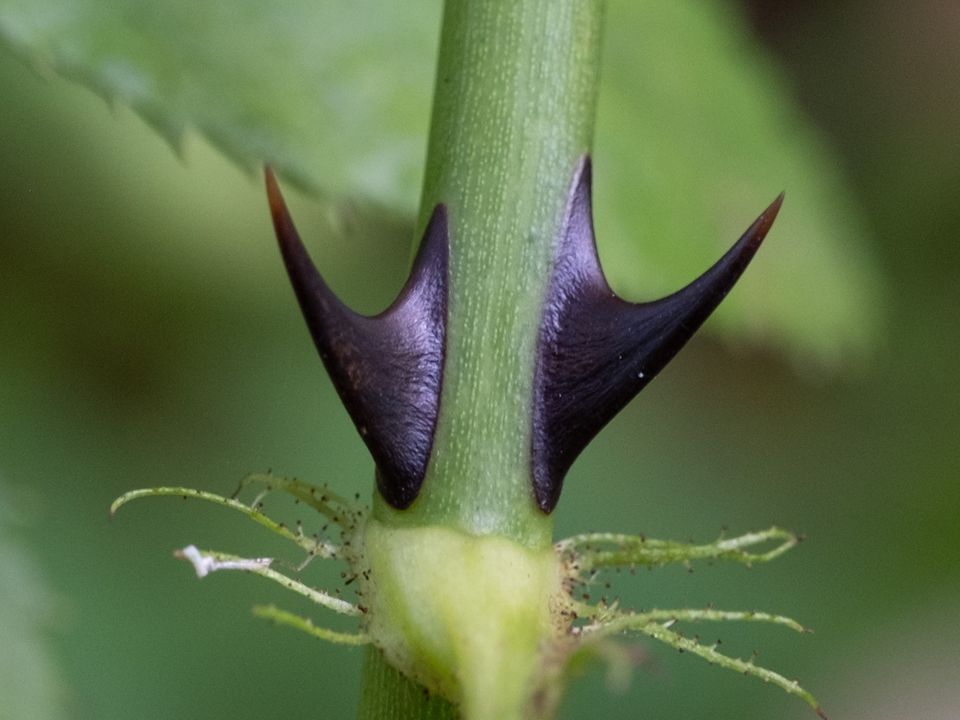 Multiflora Rose
backward-curving thorns
Buckbrush stems are smooth, slender, and thornless at every age — tan-brown twigs with tiny opposite buds.
Multiflora Rose canes carry stout backward-curving thorns at every node — on green growth and woody canes alike. They grab clothing on contact.
Thorns persist on bare winter canes — the year-round ID even when leaves and fruit are gone.
 Quick check
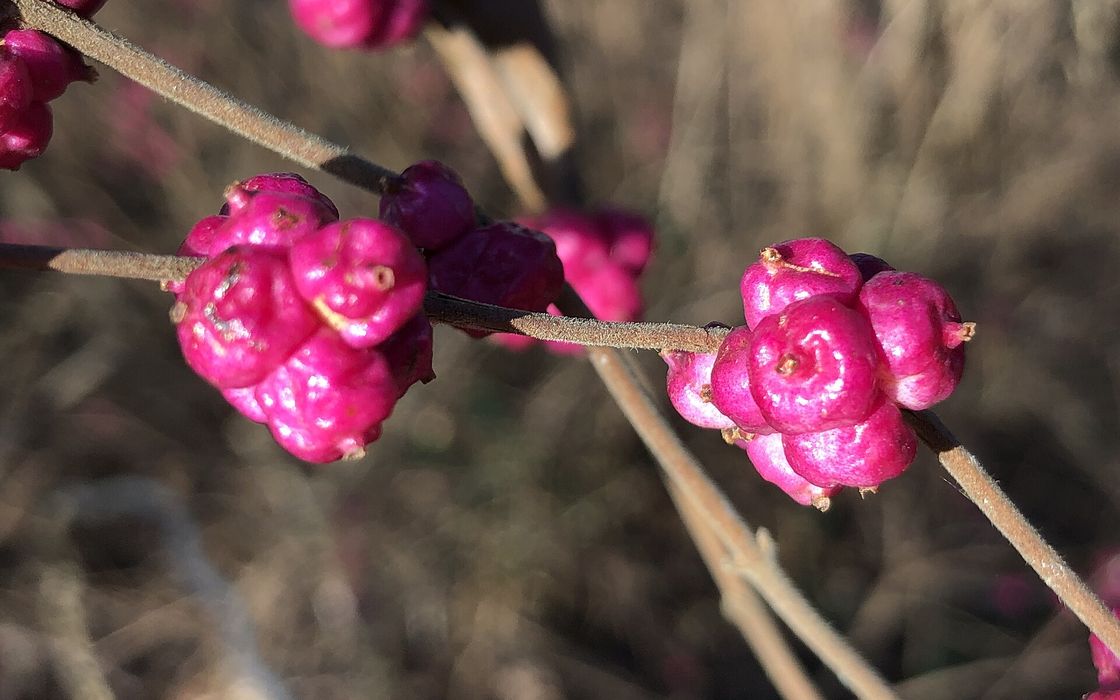
Late October. 3 ft low spreading thicket along the ROW edge, ~15 ft off centerline. Smooth slender stems, no thorns. Simple opposite oval leaves. Dense clusters of bright coral-pink berries packed along the stem.
Keep or treat?
A. Keep
B. Treat
Quick check
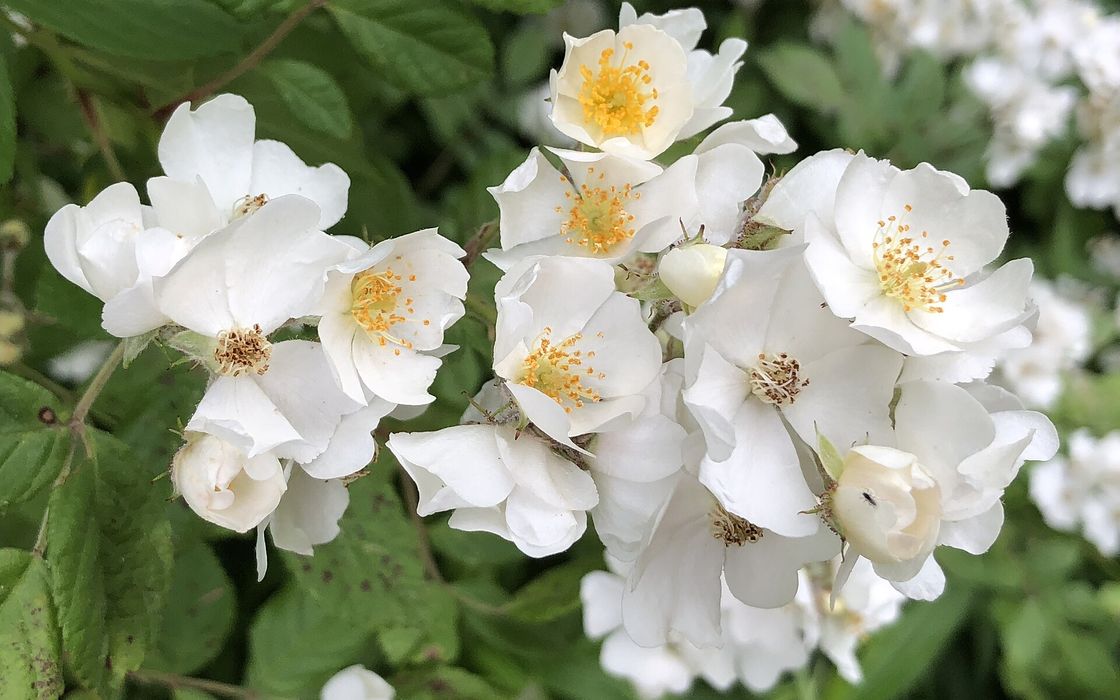
Late spring. 6 ft mounding shrub at the ROW edge, ~10 ft off centerline. Arching canes with backward-curving thorns at every node. Compound leaves with 7 toothed leaflets. Clusters of small white 5-petal flowers.
Keep or treat?
A. Keep
B. Treat
Quick check
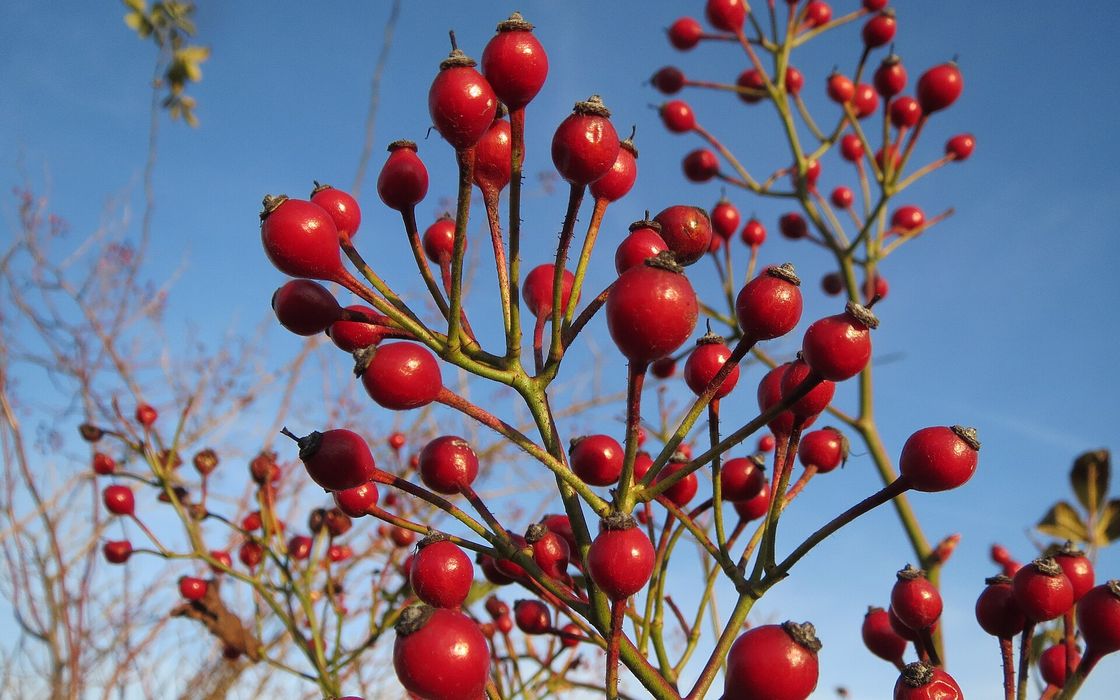
February survey. 4 ft tangle of arching bare canes at the ROW edge, no leaves visible. Stems show backward-curving thorns at every node. Last year's small red rose hips still hanging in clusters.
What's the right call?
A. Keep
B. Treat

Almost there
Answer all three checks and your score appears here.