Partridge Pea
vs Sericea Lespedeza
Two pea-family meadow plants with fine compound leaves. One feeds bees and quail. The other forms monocultures.
Why They're Easily Confused
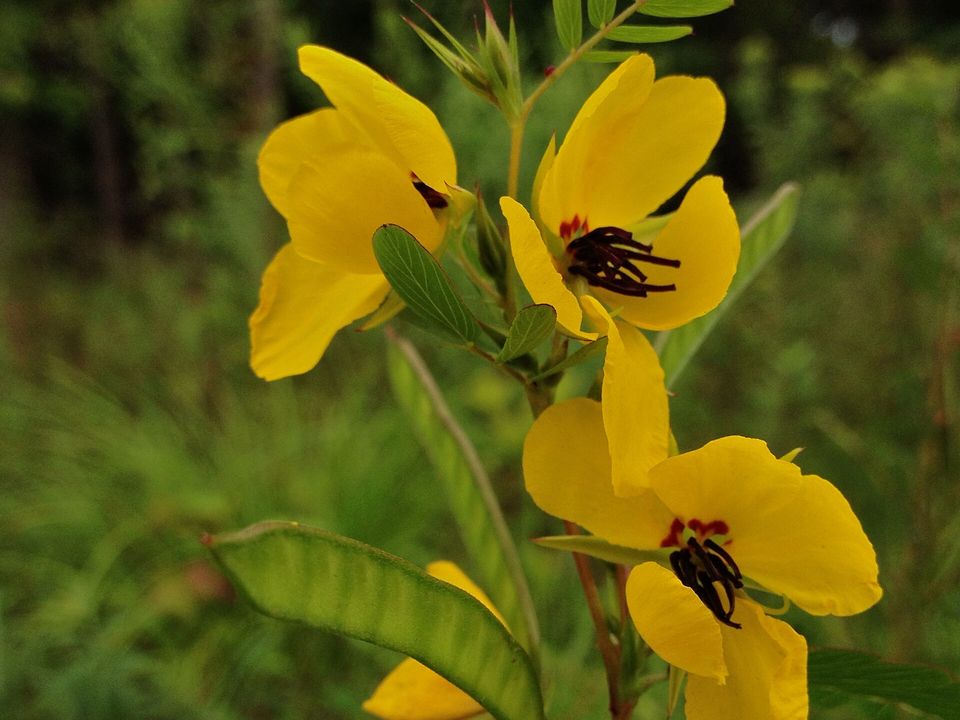
 Partridge Pea
pollinator + game-bird native
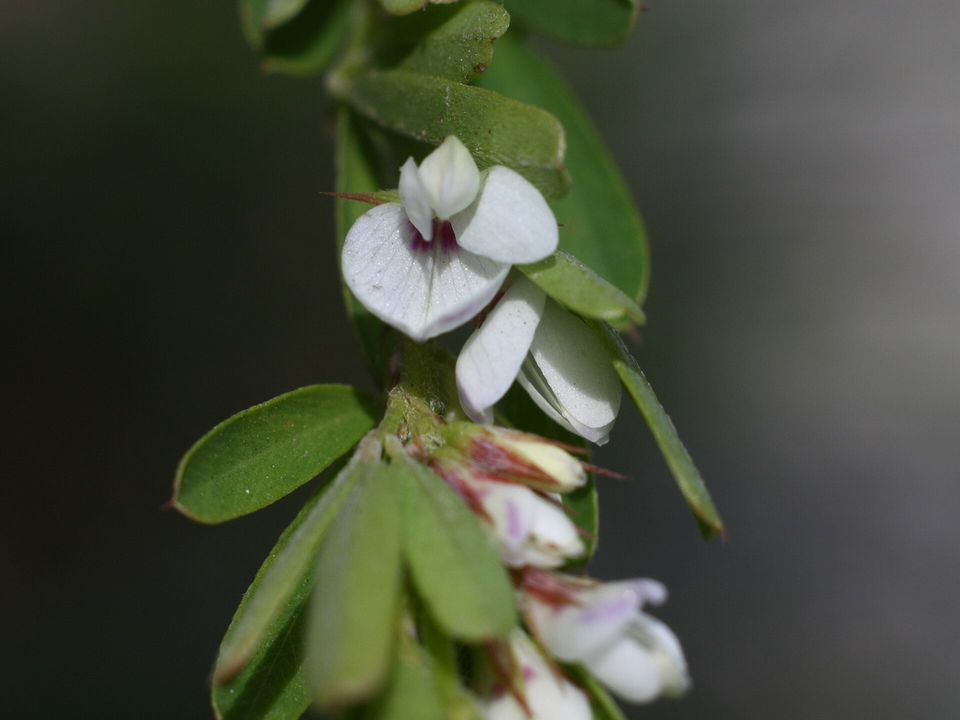
 Sericea
monoculture-forming invasive
Both are pea-family natives of meadow ROW with fine compound foliage. At a glance, both can read as "small leguminous plant."
Partridge Pea is a native pollinator plant — bees on the flowers, quail and turkey on the seeds, nitrogen for the soil. Let it grow.
Sericea Lespedeza looks like a tall native legume but forms allelopathic monocultures that displace pollinators and game-bird forage. Treat on sight.
The flowers
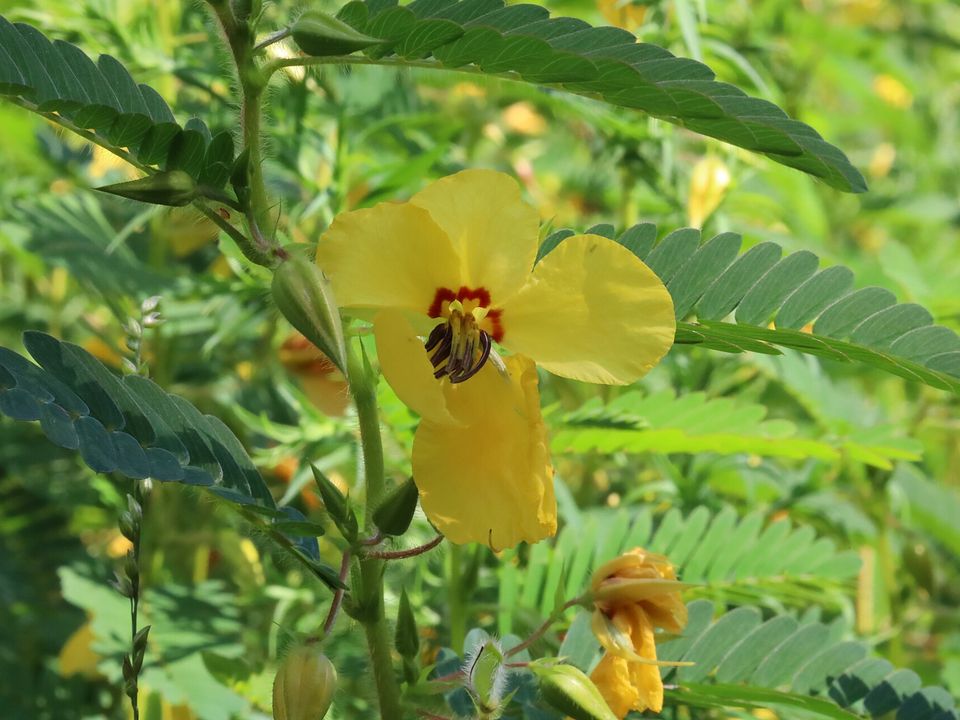 Partridge Pea
showy yellow + red-purple center
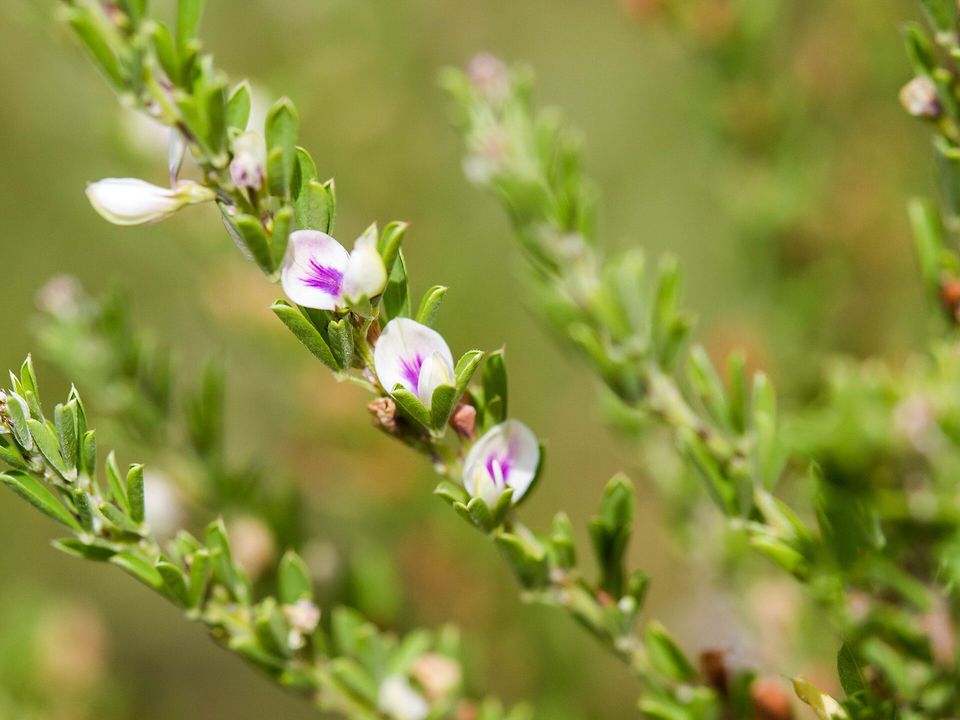 Sericea
tiny cream, hidden in leaf axils
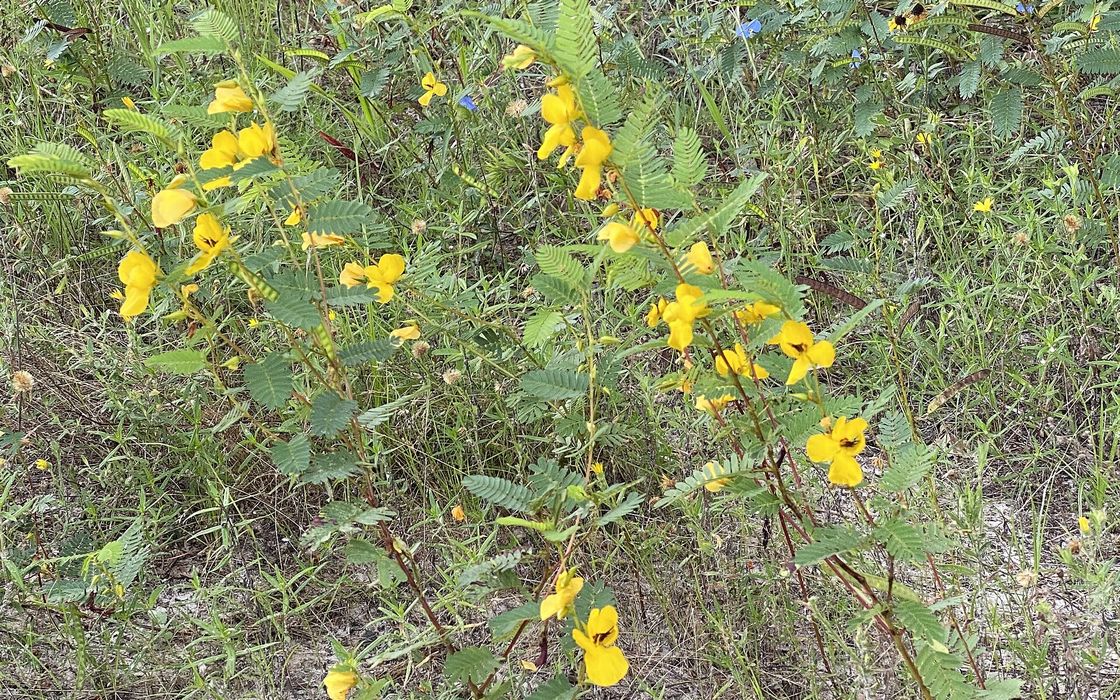
Partridge Pea has showy ~1-inch yellow flowers with five petals and a distinctive red-purple center spot. Bees and butterflies cover them in summer.
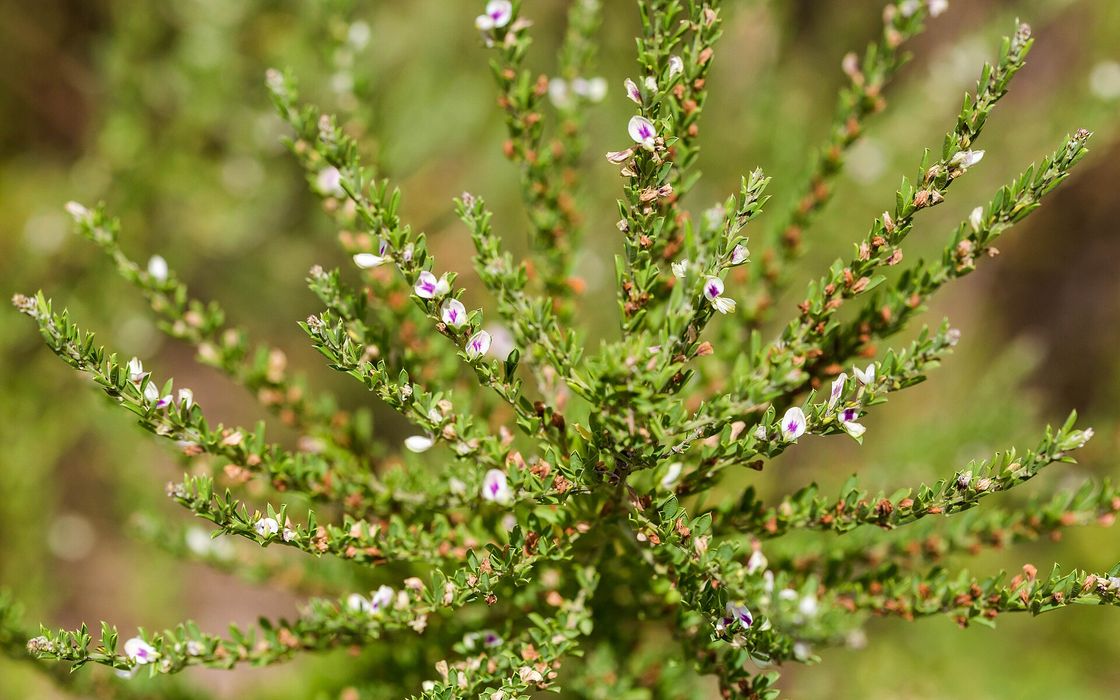
Sericea has tiny cream-white pea flowers with purple veining, tucked into the upper leaf axils — easy to miss unless you're looking close.

Leaves — the diagnostic
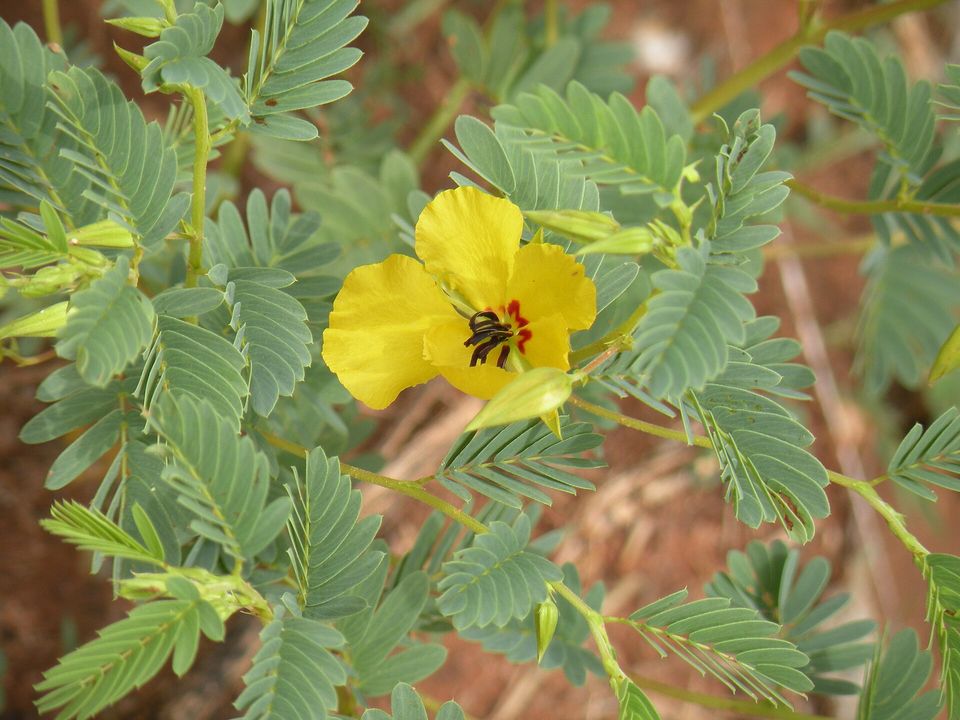 Partridge Pea
pinnate, 10–16 pairs, sensitive
Sericea
trifoliate, 3 leaflets only
Partridge Pea leaves are pinnately compound with 10–16 pairs of small narrow leaflets. The leaflets fold closed when touched — a great field test no other ROW legume does.
Sericea leaves are trifoliate — just three narrow leaflets per leaf, alternating up the stiff upright stem. Leaflets do not fold when touched.
Size & growth habit
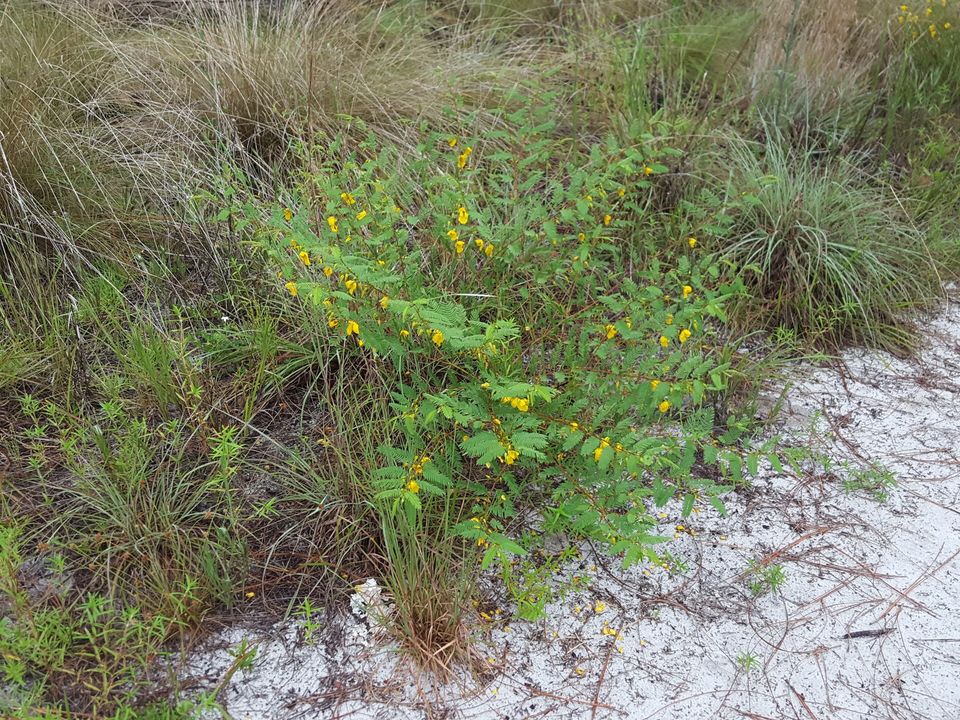 Partridge Pea
low, 1–3 ft, sprawling
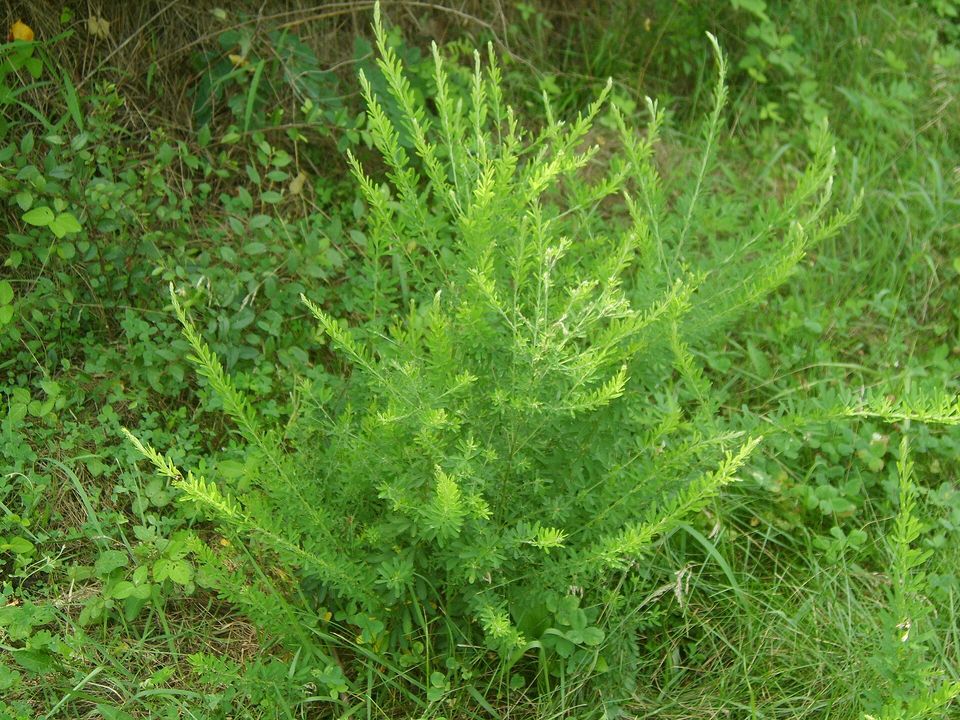 Sericea
tall, 3–5 ft, wand-like clump
Partridge Pea grows low and sprawling — usually 1–3 ft, often bushy and lax, blending into the surrounding meadow.
Sericea grows tall and upright in dense clumps — 3–5 ft wand-like stems, often forming monocultures that exclude everything else.
 Quick check
August, dry sunny ROW shoulder. 4 ft tall, upright wand-like clumps forming a dense stand. Tiny cream-white pea flowers tucked into upper leaf axils. Each leaf has three narrow leaflets.
Keep or treat?
A. Keep
B. Treat
Quick check
July, sunny ROW pollinator strip. Low sprawling 2 ft plant with showy 1-inch yellow flowers with red-purple centers. Bees on the flowers. Leaves have many pairs of small leaflets — touching them, the leaflets fold closed.
Keep or treat?
A. Keep
B. Treat
Quick check
Mid-June, dry ROW shoulder being reclaimed for pollinator habitat. Upright 3 ft stems, green and actively growing but not yet flowering, in a dense stand crowding out everything around them. Each leaf has three narrow leaflets.
Keep or treat?
A. Keep
B. Treat

Almost there
Answer all three checks and your score appears here.