Yarrow
vs Poison Hemlock
Both are white-flowered with feathery leaves. One is herbal medicine. The other is the most poisonous plant in North America.
Why They're Easily Confused
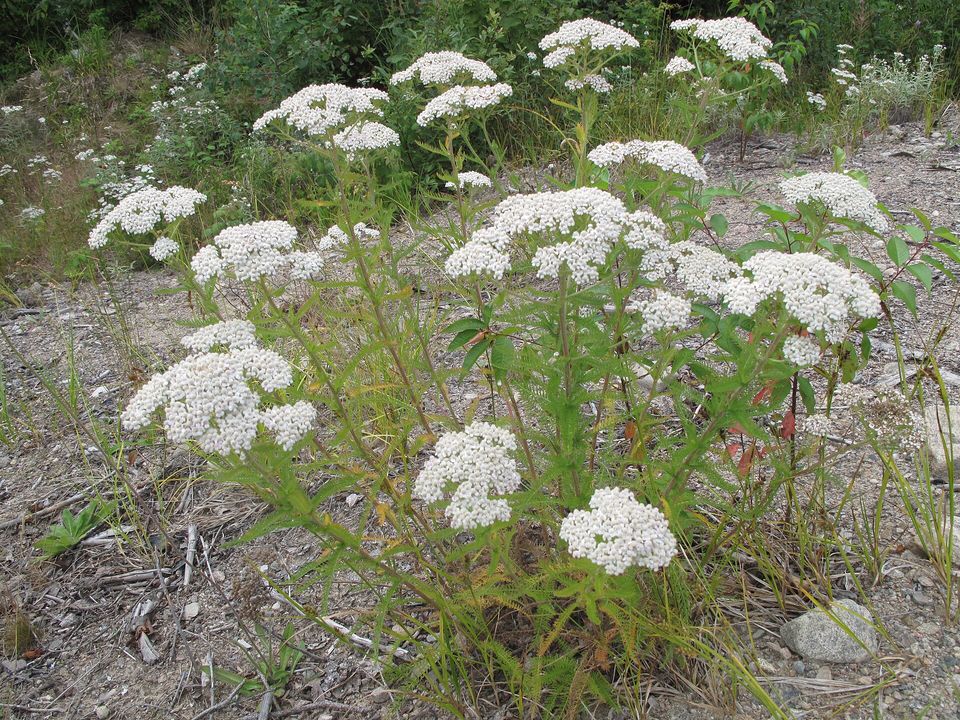
 Yarrow
pollinator native
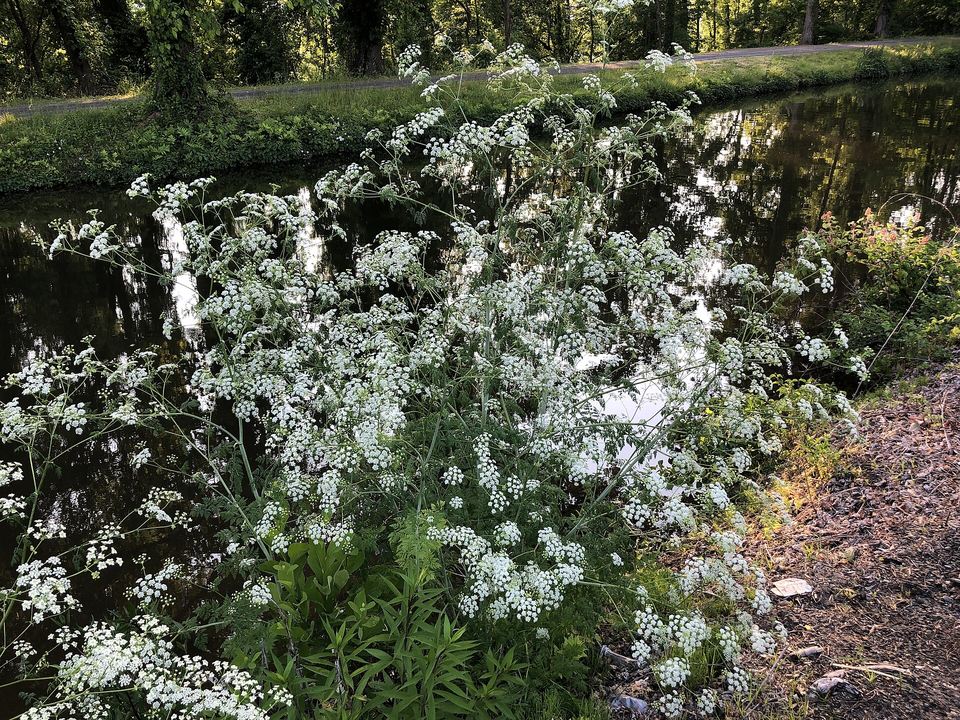
 Hemlock
highly toxic invasive
Both have flat-topped white flower clusters and feathery dissected leaves. From a distance they read the same.
Yarrow is a compatible pollinator native — let it grow.
Poison Hemlock is so toxic that contact with sap can cause illness. Wear gloves and treat on sight.
Flower cluster up close
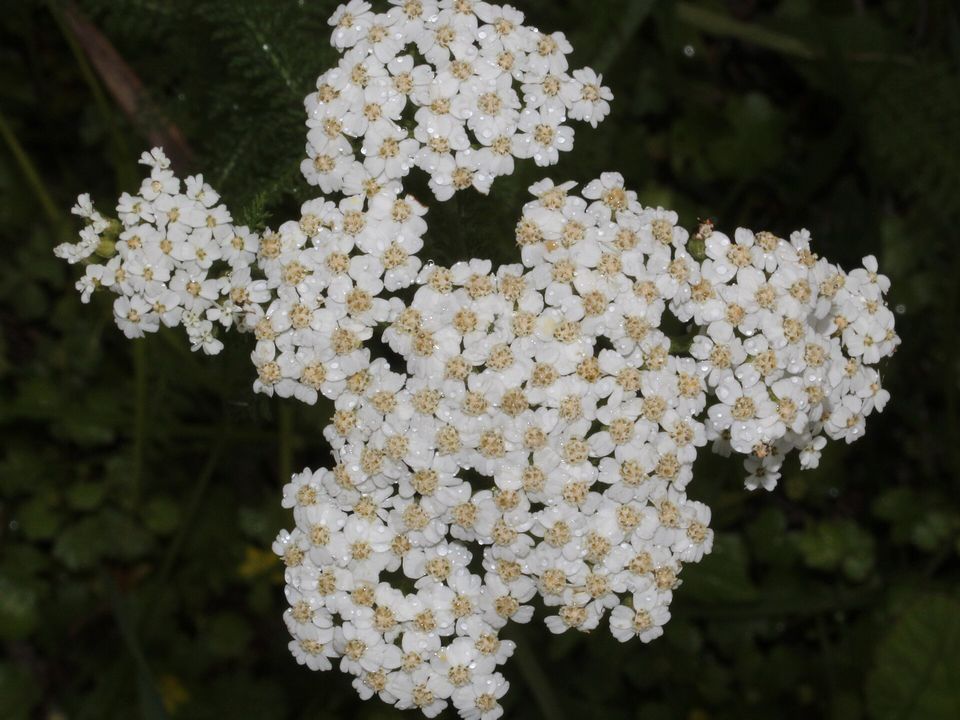 Yarrow
tight corymb, daisy-like florets
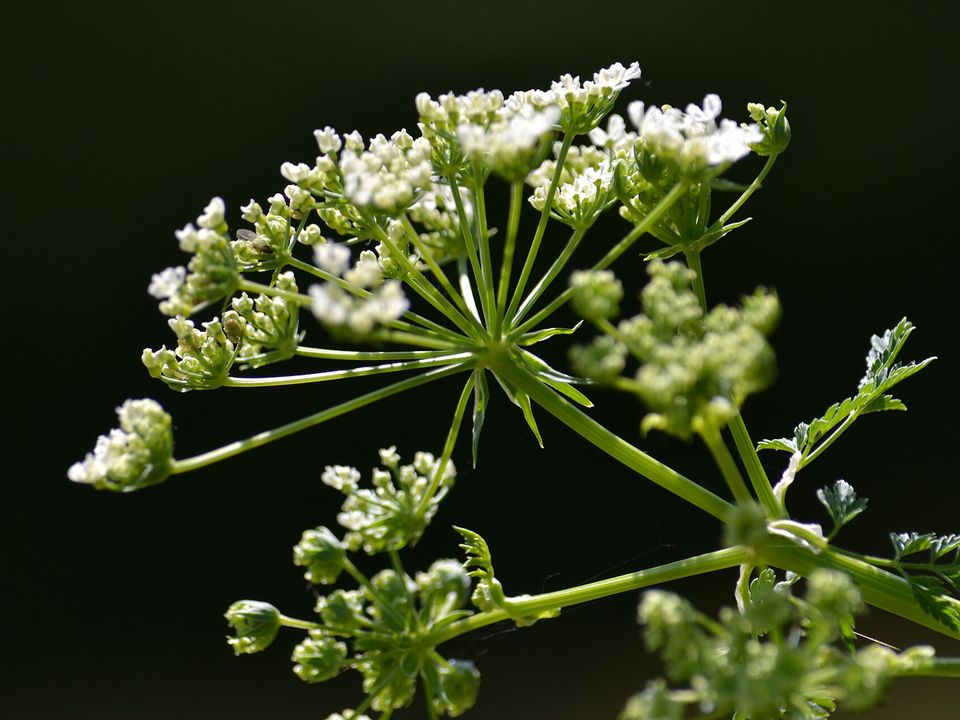 Hemlock
open umbel, distinct spokes
Yarrow is in the aster family. The cluster is a tight flat corymb of tiny daisy-like florets — each with white ray petals around a yellow center.
Hemlock is in the parsley family. Flowers form distinct umbrella spokes (compound umbels) — like wild carrot, but on a much larger plant.

Stem — the diagnostic
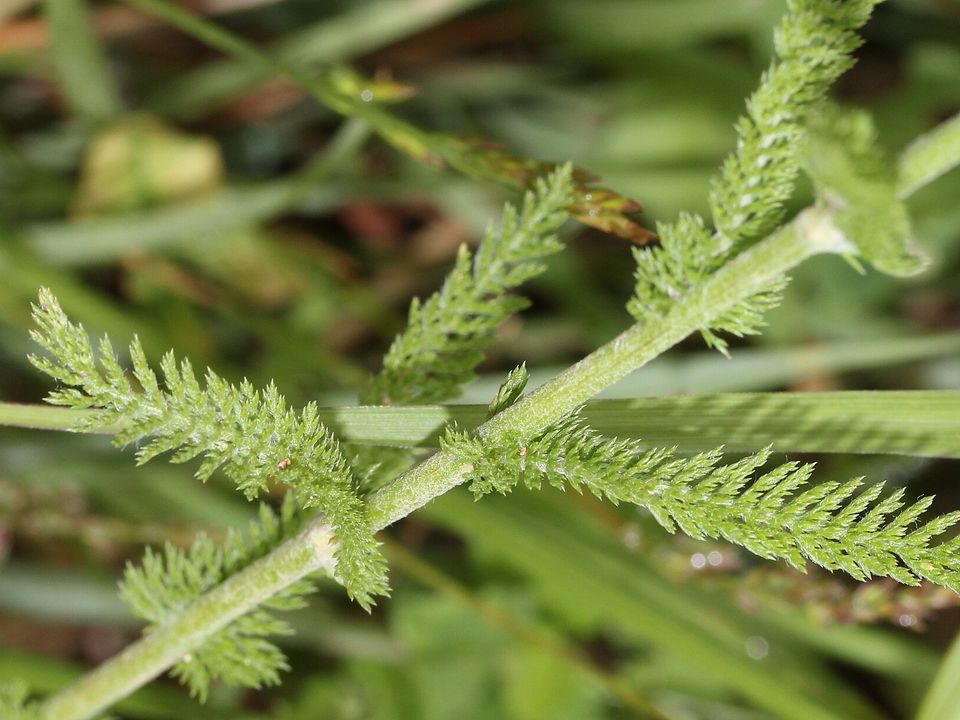 Yarrow
solid, hairy, no spots
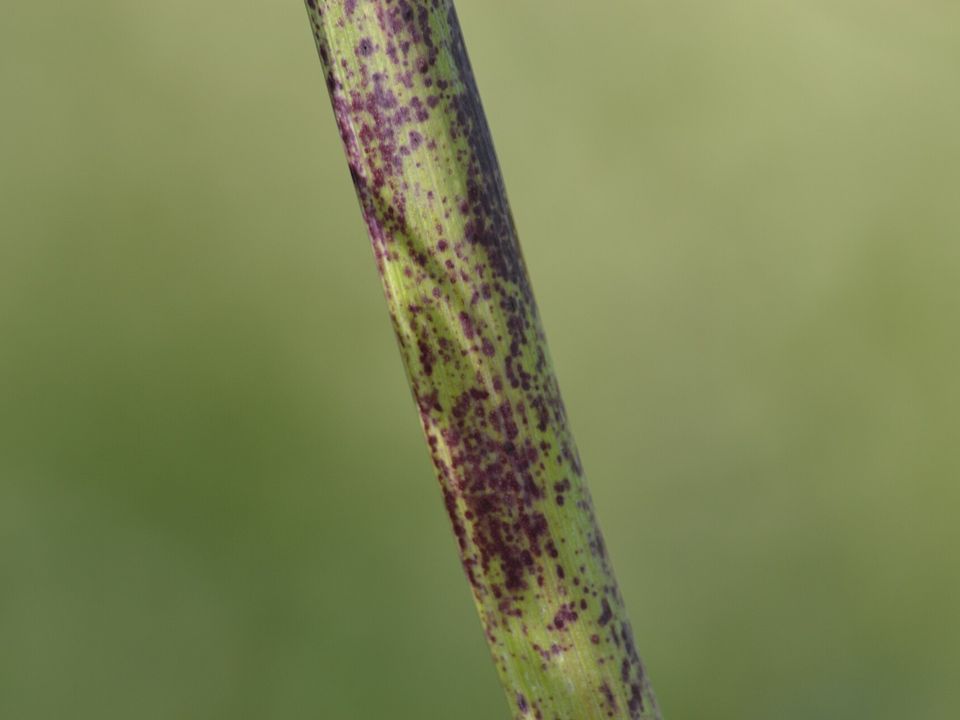 Hemlock
smooth, hollow, purple-blotched
Yarrow stems are solid, ridged, and softly hairy. They stay uniform green or grey-green — never spotted.
Hemlock stems are smooth, hairless, hollow, and almost always show purple-red blotches or streaks — usually most visible on the lower stem.
Stem cue shows even before flowering. If you only check one feature, check this one.
Size & habit
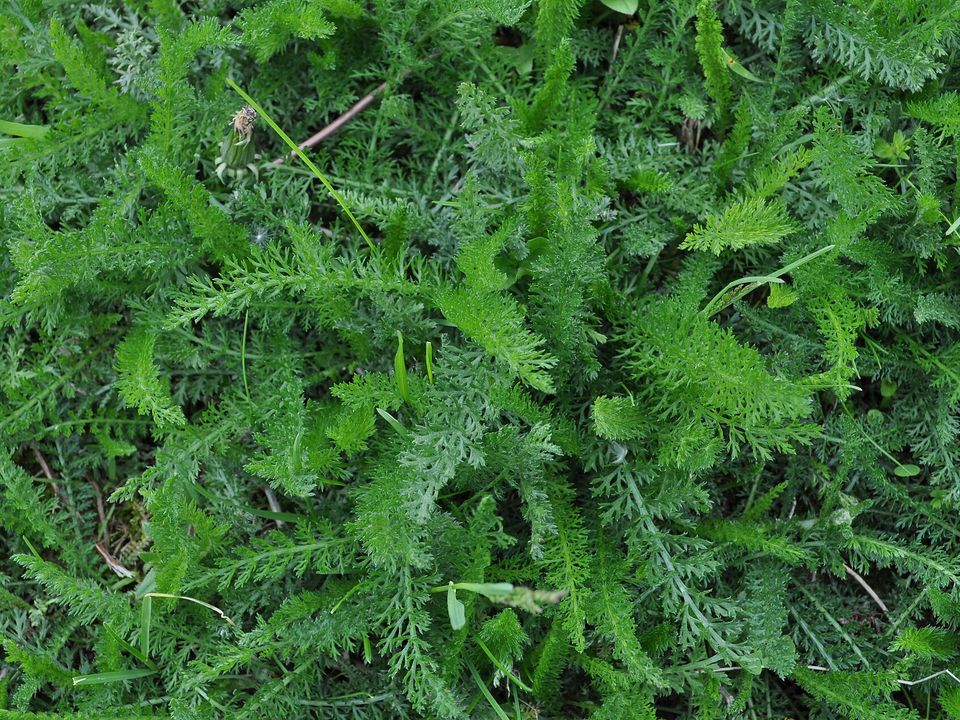 Yarrow
low, 1–3 ft, fragrant
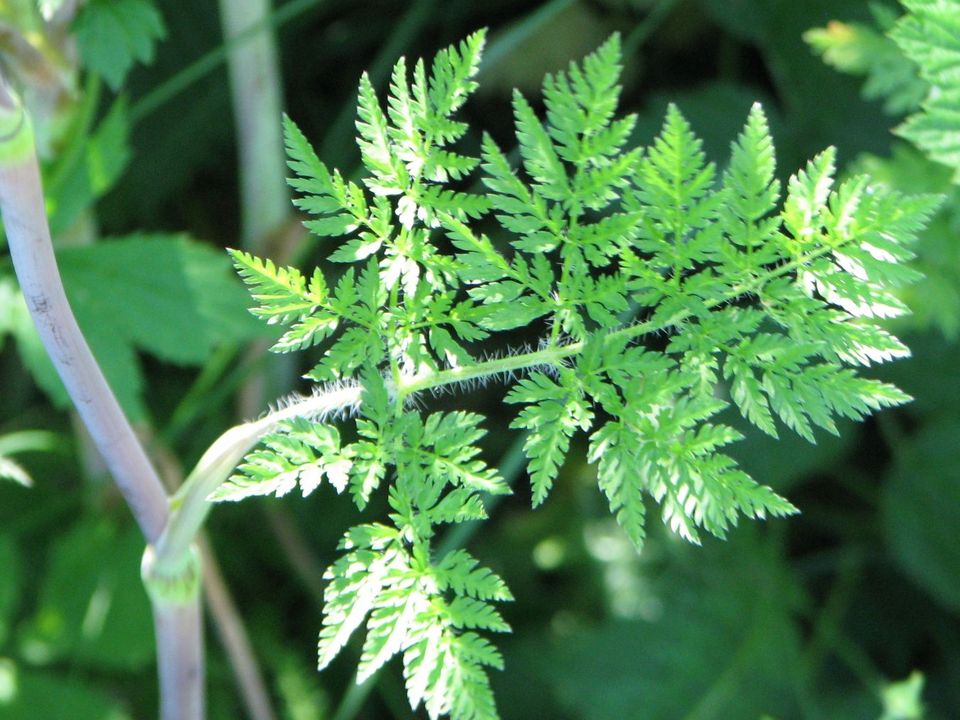 Hemlock
tall, 3–6+ ft, foul smell
Yarrow stays low and dense — usually under 3 ft, often patchy in dry meadows and roadsides. Crushed leaves smell pleasantly herbal.
Hemlock grows tall and gangly — 3–6 ft, sometimes over 8 ft. Crushed leaves smell foul and musty. (Don't crush bare-handed — sap is toxic.)
 Quick check
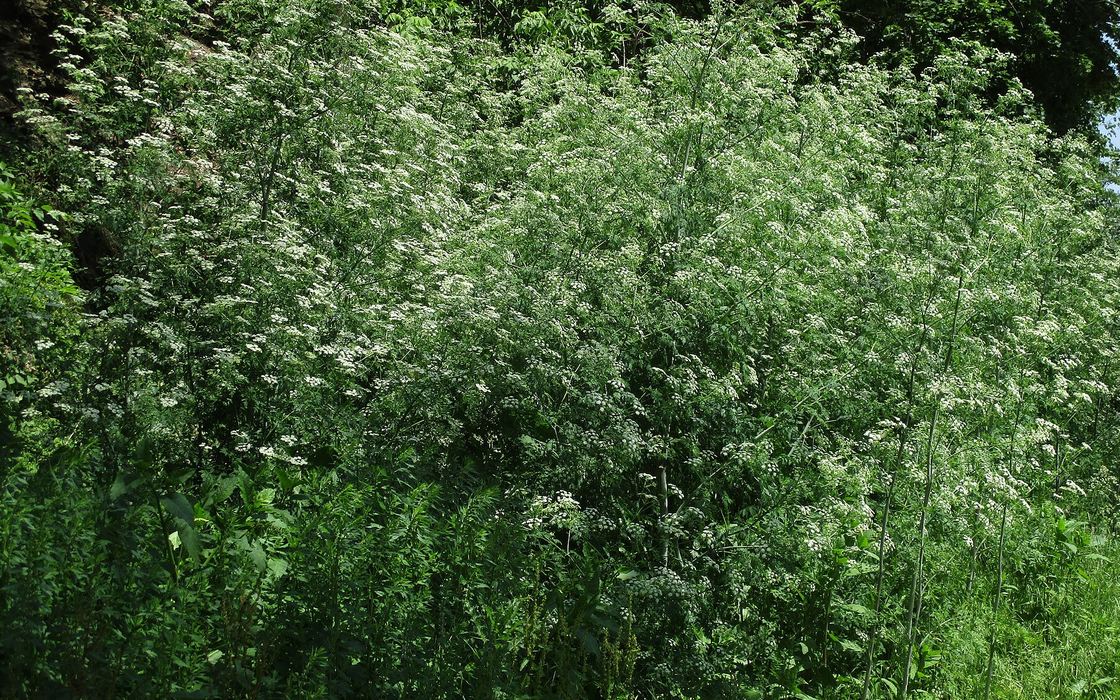
Disturbed roadside ROW, mid-June. ~5 ft tall plant with white umbrella-spoke flower clusters. Stem is smooth, hollow, and shows purple-red blotches near the base.
Keep or treat?
A. Keep
B. Treat
Quick check
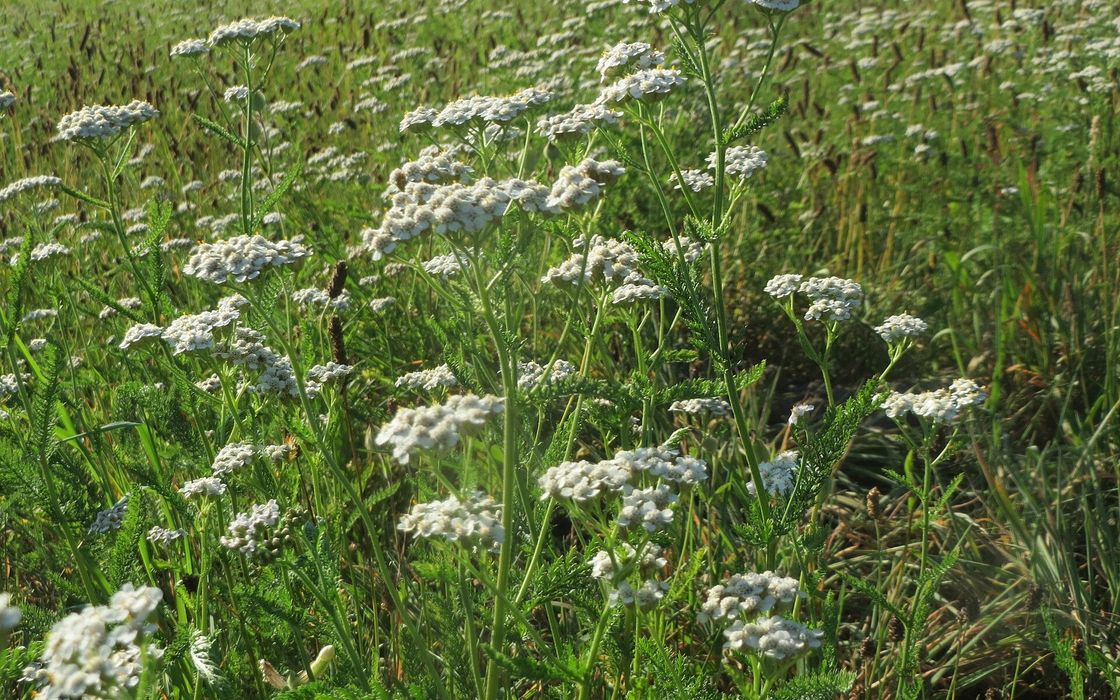
Sunny dry meadow on the ROW. ~2 ft plant with tight flat-topped clusters of tiny white daisy-like florets. Stem is solid, ridged, and softly hairy. Crushed leaves smell pleasantly herbal.
Keep or treat?
A. Keep
B. Treat
Quick check
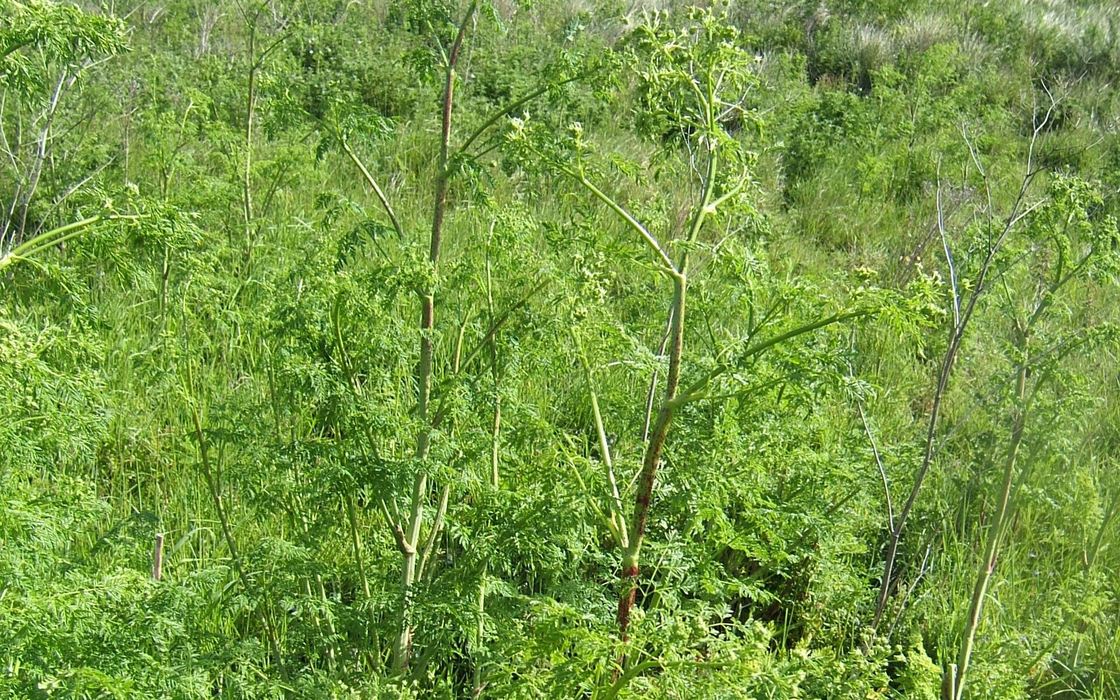
Early May, wet ditch on a ROW edge. 4 ft pre-flower plant with finely divided fern-like leaves. Bare-stemmed already. Looking close, you see faint purple streaks beginning to show at the lower stem.
Keep or treat?
A. Keep
B. Treat

Almost there
Answer all three checks and your score appears here.