Using a Field Handbook
Using a Field Handbook
In this module, you’ll practice using a plant field handbook on its own pages: opening the right part, finding a plant you don’t know, and reading its profile.
Learning objectives
After completing this module, you will be able to:
- Choose the part of the handbook that answers a field question.
- Find an unknown plant through its leaf type and the Leaf index.
- Read a plant profile for its verdict, height and look-alike.
The field handbook
Crews and planners often carry a field handbook to check a plant before they treat it or leave it. It tells them what the plant is, whether it can stay on the right-of-way, and where.
The handbook in this module is a short sample written for it. It covers six woody plants of eastern rights-of-way, each with a one-page profile.
You will work on the handbook’s own pages. Each tap is one you would make with the book in your hand.
How the handbook is organized
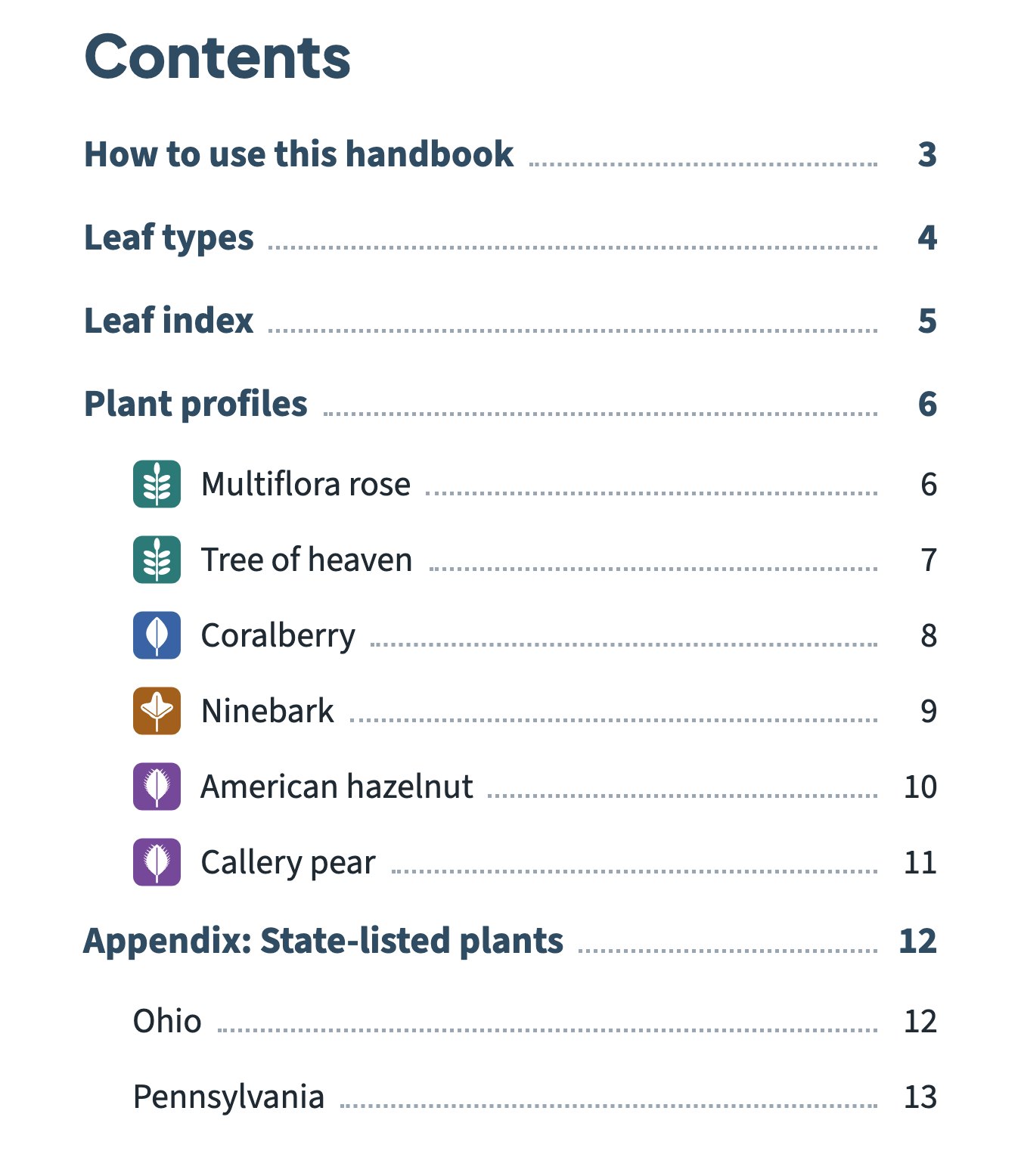
The Contents on page 2 lists five parts.
- How to use this handbook. The route for identifying a plant, and a key to the symbols on every profile.
- Leaf types. The four leaf types the handbook sorts by.
- Leaf index. Every plant sorted by leaf type, with a photo of each leaf. The place to start for a plant you don’t know.
- Plant profiles. One page per plant. Each plant has its own line in the Contents.
- Appendix. State-listed plants, one page per state.
Four leaf types
The Leaf index and every profile sort plants by one leaf, and each type has its own symbol. First decide whether the leaf is compound or simple. A simple leaf is a single blade on one stalk. Simple leaves are then sorted by their edge.
Compound
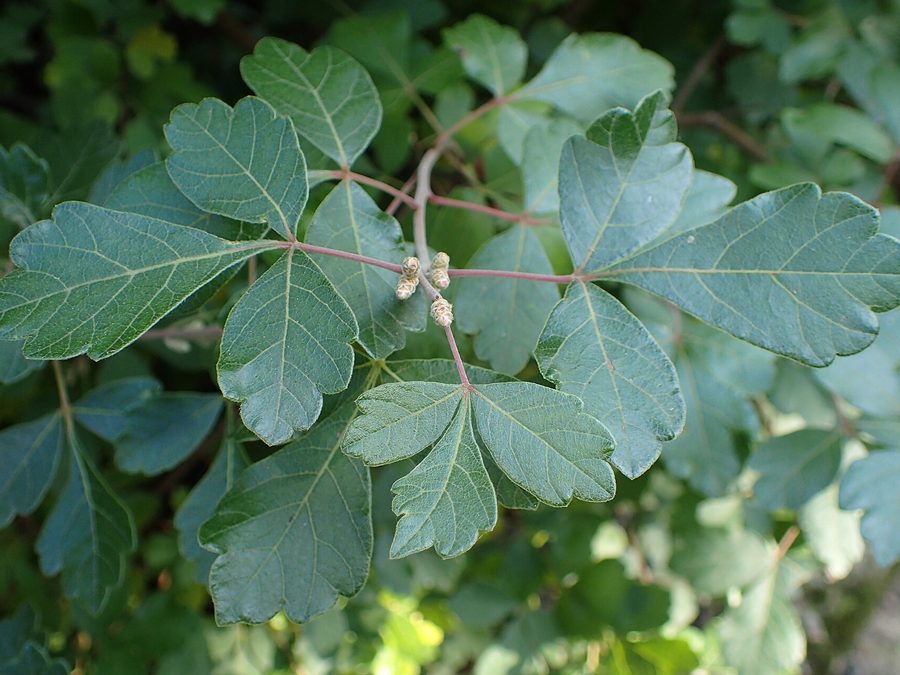 Fragrant sumac
 CompoundDivided into separate leaflets along one stalk.
Simple: sorted by edge
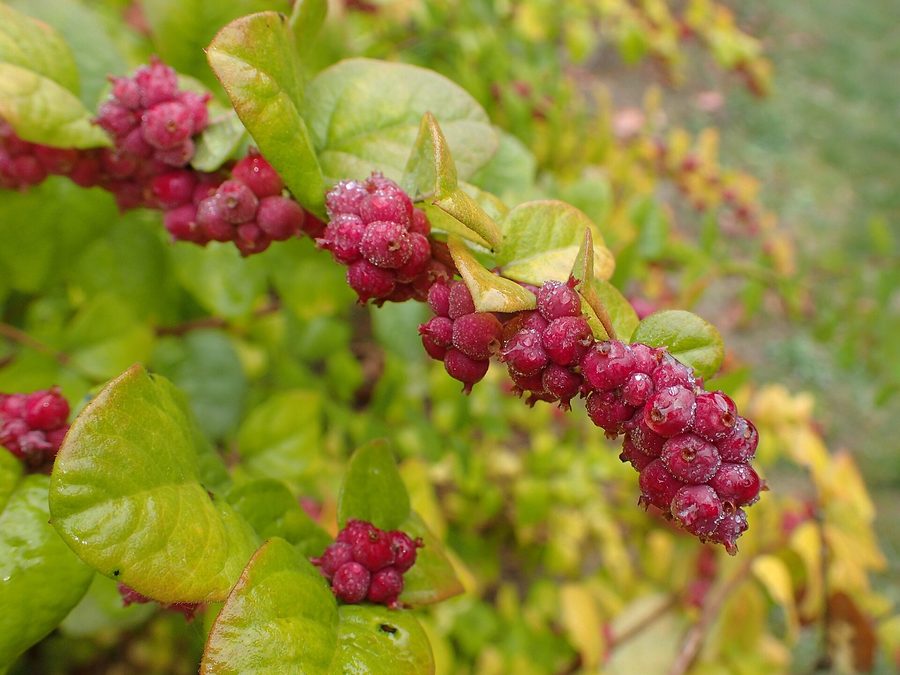 Coralberry
 EntireA smooth edge, with no teeth or lobes.
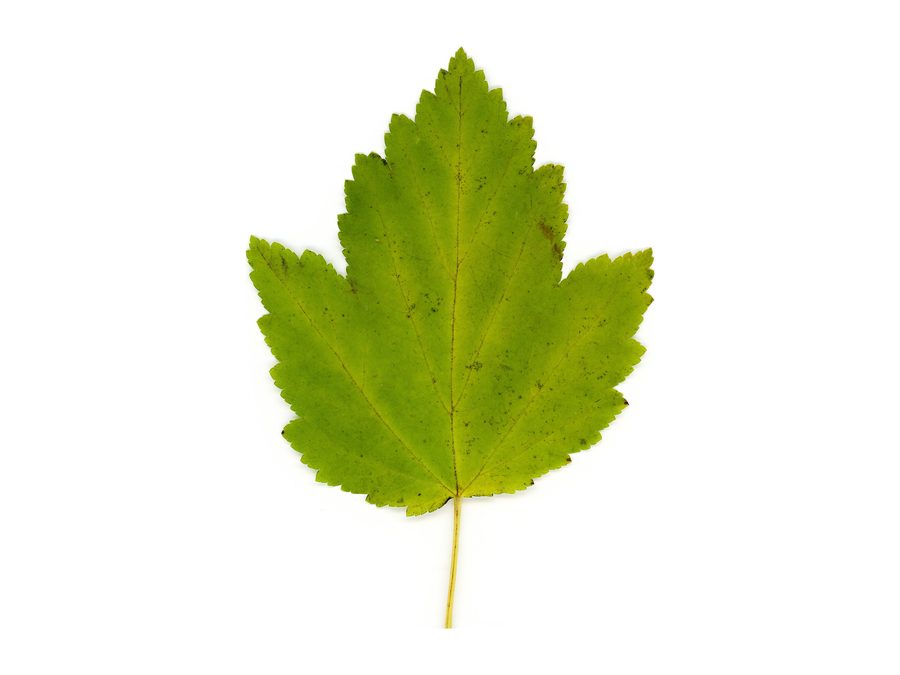 Ninebark
 LobedThe edge is cut into rounded or pointed lobes.
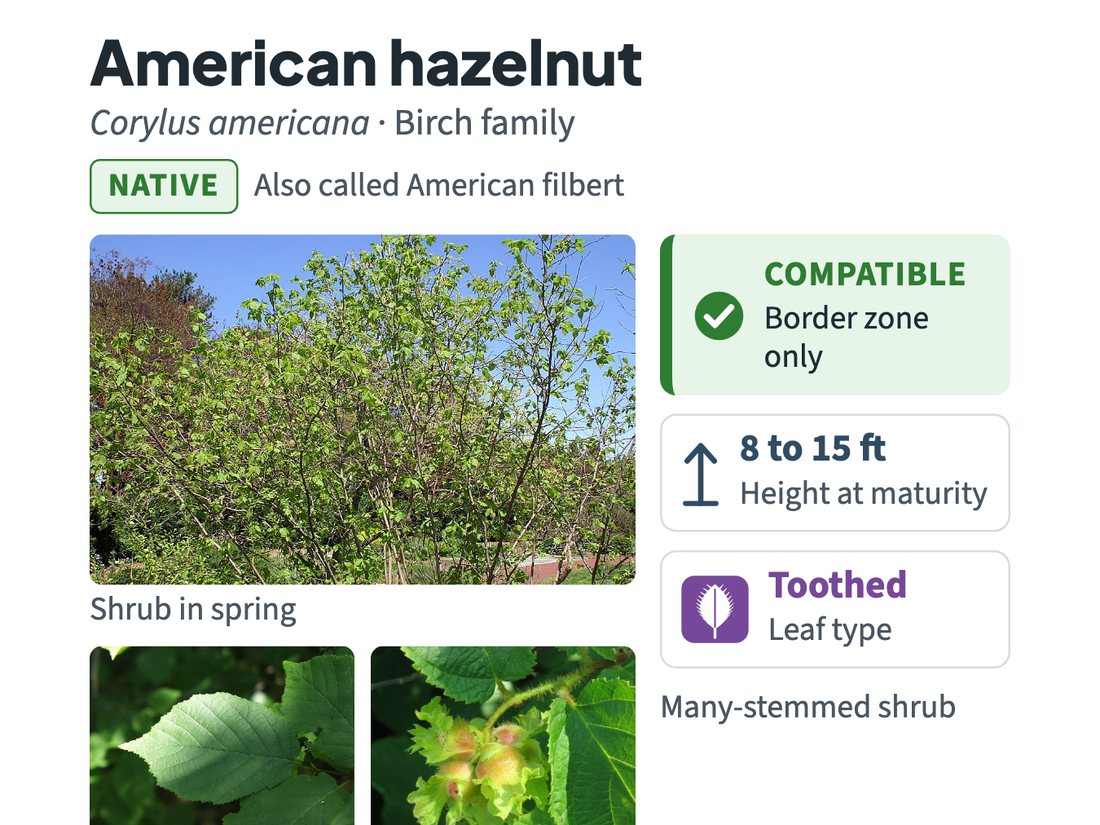
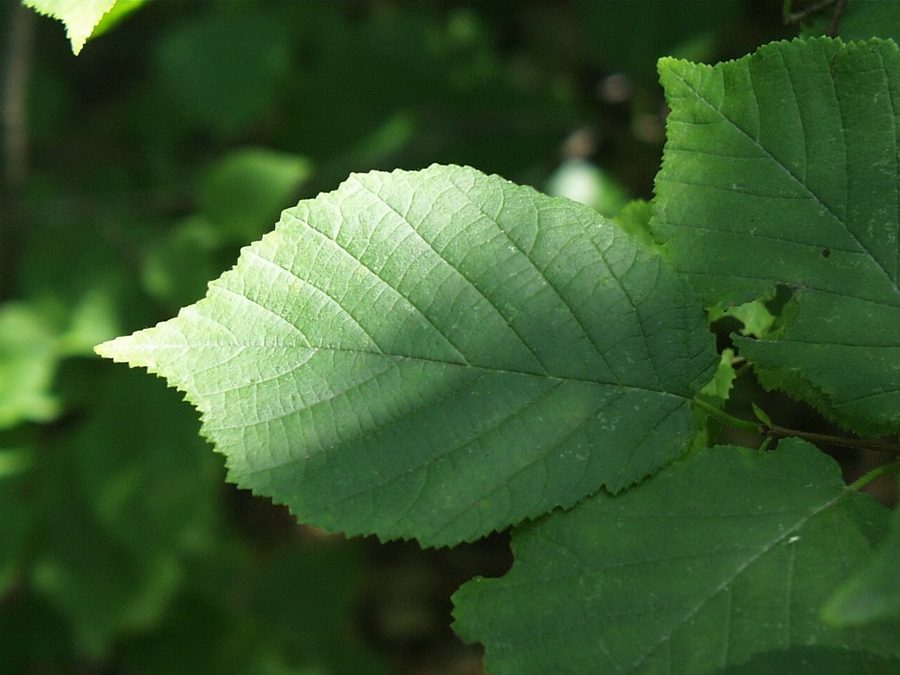 American hazelnut
 ToothedSmall teeth or scallops all along the edge.
Filing rules. A compound leaf is filed under Compound even when its leaflets have teeth. A simple leaf with lobes is filed under Lobed even when the lobes have teeth.
Identifying an unknown plant
You find this plant on a right-of-way and you don’t know what it is. Work through the handbook to find it. This practice is not scored.
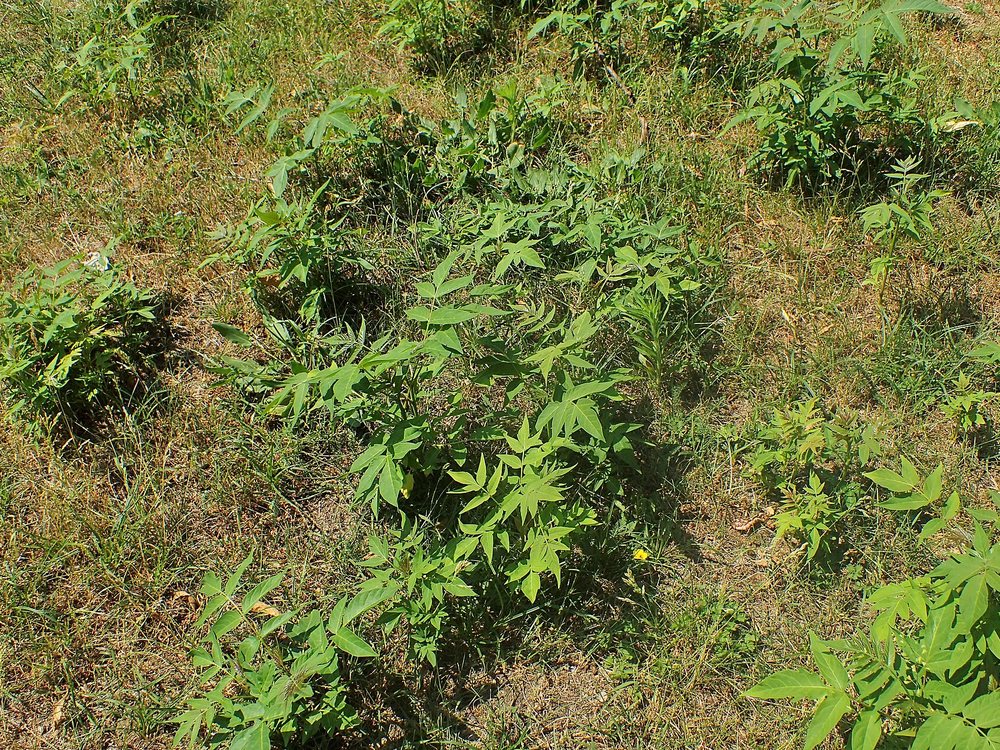 The plant
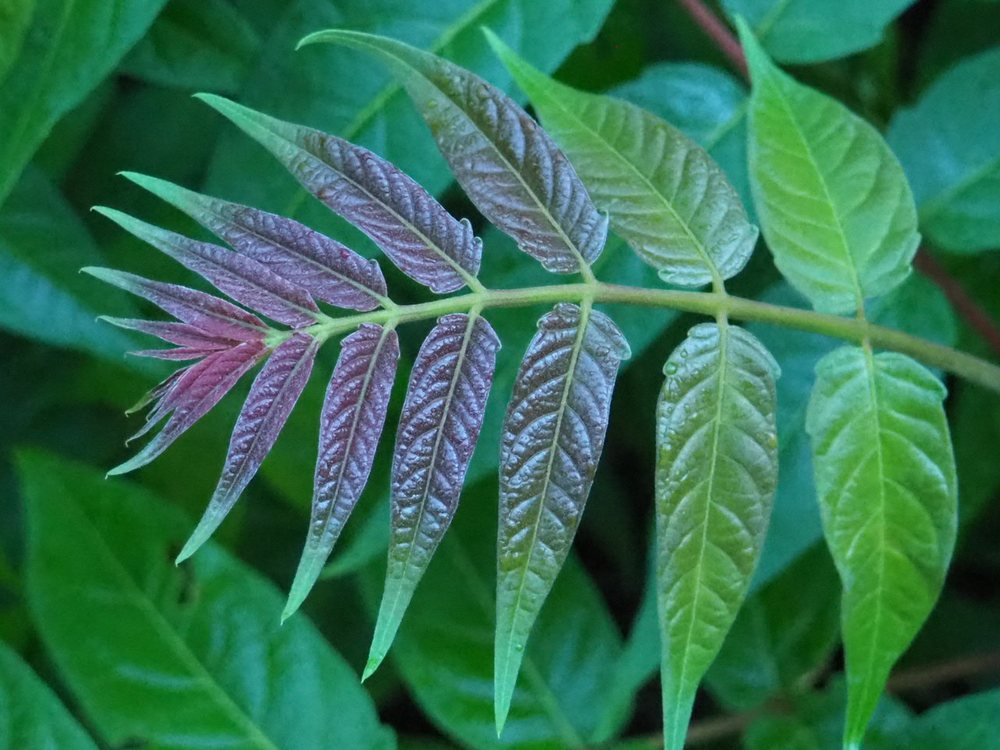 Its leaves
The profile of the plant you found
In the last lesson you found the plant on page 7. It is tree of heaven. Now read its profile. This practice is not scored.
The plantIts leavesHere are the main ideas from this module.
Key point 1 of 3Using the Contents
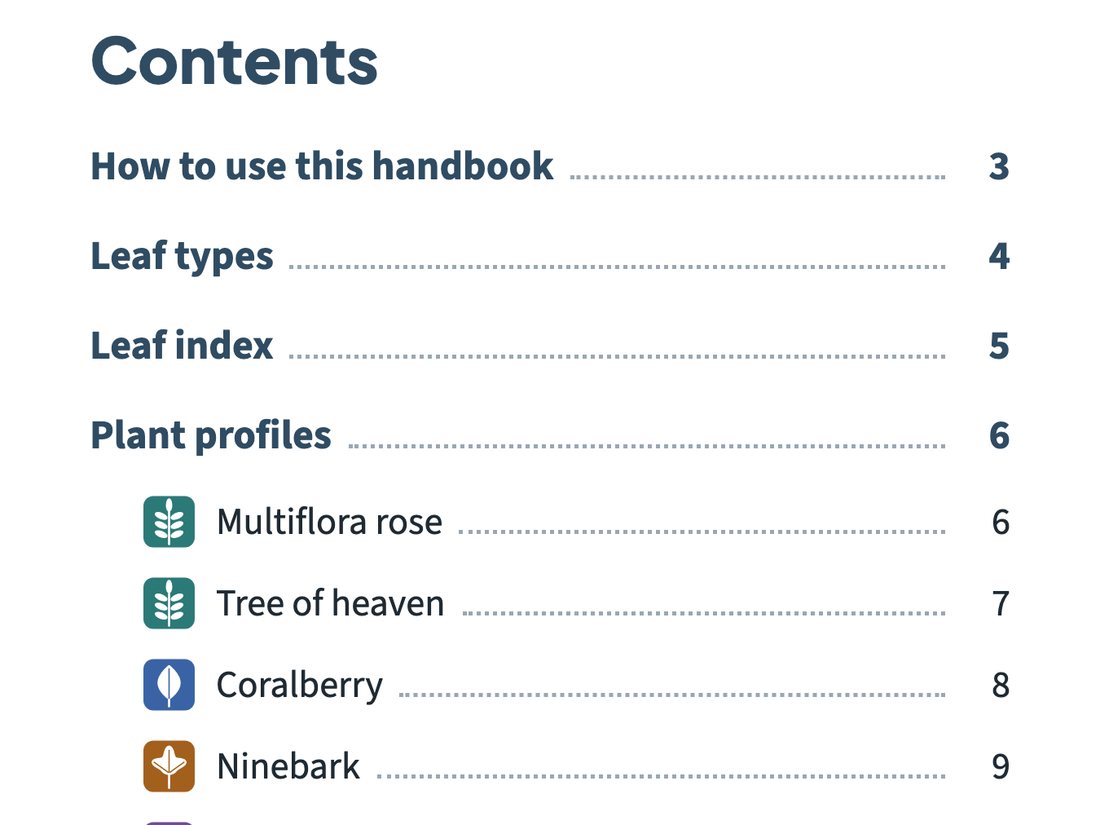
A plant you don’t know starts in the Leaf index. A plant you know by name has its own line under Plant profiles. State listings are in the Appendix, one page per state.
Finding a plant you don’t know
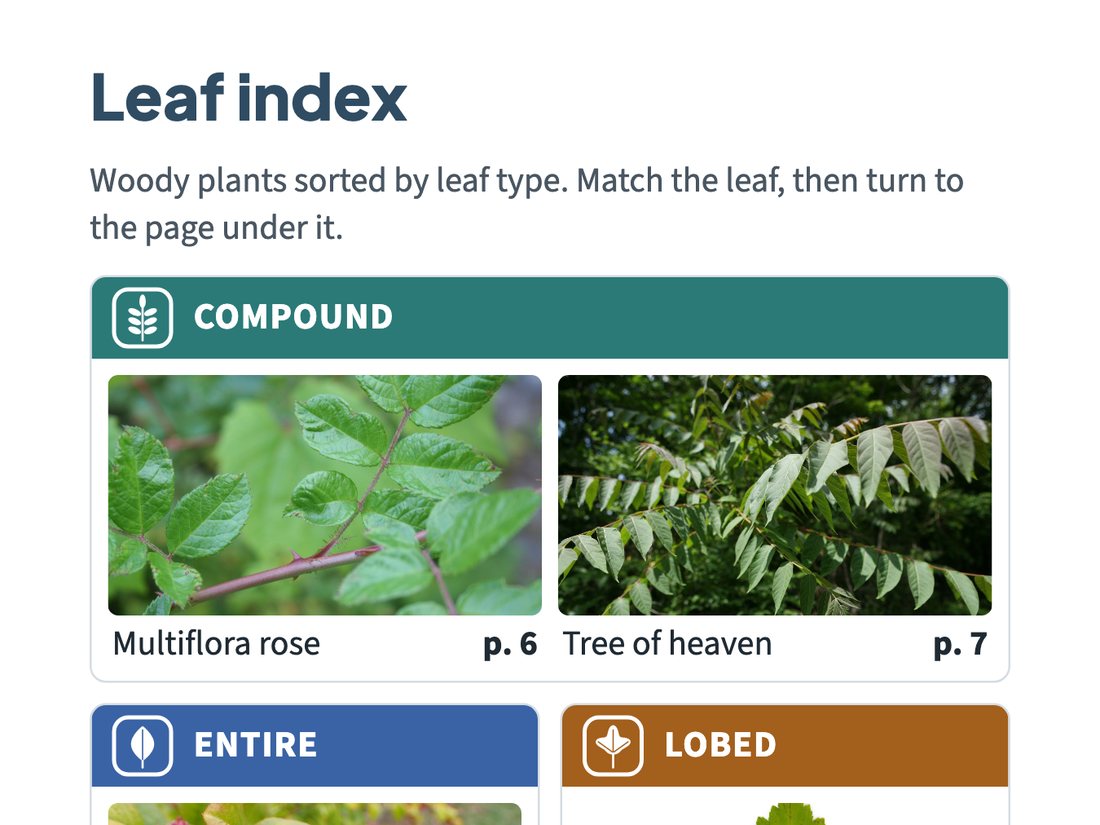
Decide compound or simple, then the edge: entire, lobed or toothed. Find that section of the Leaf index, match the photo and turn to its page.
Reading a profile before you act
The verdict says whether a plant stays and where. Judge it by its height at maturity, and check the key features and the look-alike before you act.