
Essay · June 3, 2026
A Different Kind of Graduation

My instructional design agency ID Atlas turned two last month.
Before starting this company I was a solo freelancer doing mainly eLearning development, and while the work was fine, it was missing the part of instructional design I loved most early in my career: coaching people, mentoring them, and watching someone get good at something they couldn’t do just six months earlier. Head-down production work didn’t scratch that itch for me, so I went looking for a way back to it without walking away from the project work I had on my plate. The way back, it turned out, ran through Reddit.
I’d found r/instructionaldesign somewhere along the way and just started hanging around. Answering questions, offering suggestions, throwing in my two cents wherever I thought I could help. It was work, but the kind that felt more like a hobby. I did it because I liked it.
After a while I started noticing a pattern. Every so often someone would pop up asking about career coaching, or whether anybody did one-on-one Storyline training. And my wheels started turning. Hey, I could do that. Coach a few people, help them find their footing, make a little extra money doing something I already enjoyed anyway. So I reached out to a few of them.
Most career changers aren’t starting from zero
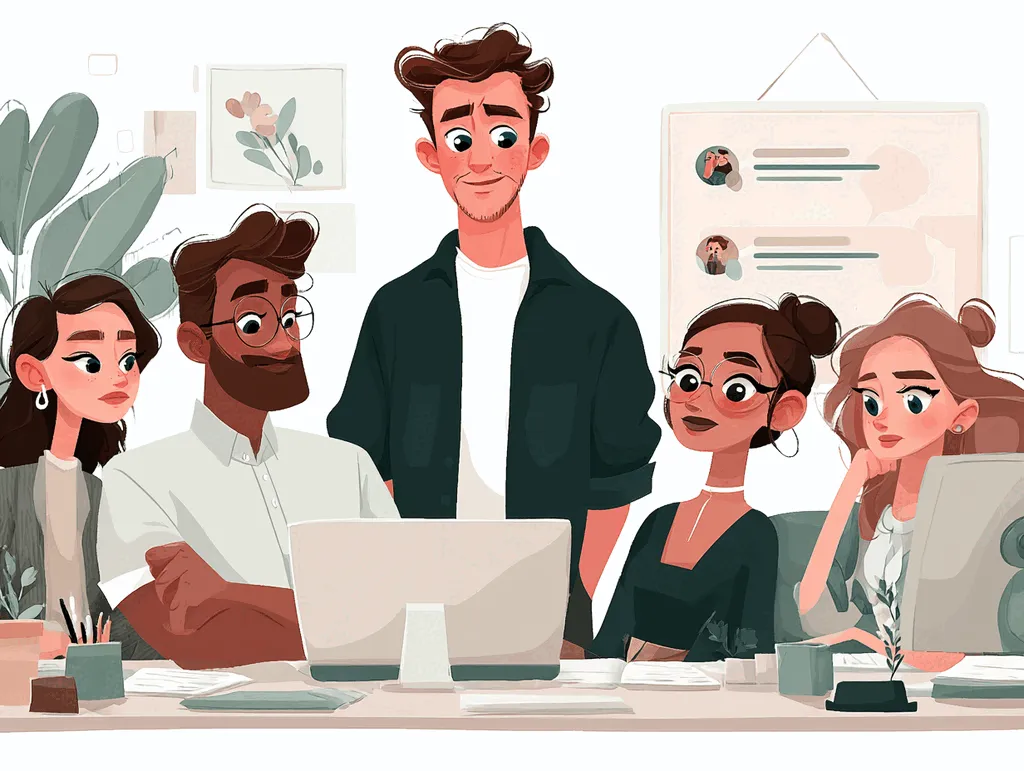
The more I talked with people, the more something clicked. They weren’t starting from nothing. A lot of them were teachers, graphic designers, marketers, folks who already had skills that transfer straight into this work and just needed experience in the field and someone to show them the ropes.
And I had the other half of the equation. I’ve got the experience, I’ve got the degree, and I know how to chase down clients and land the work. So what if I put the two together? These skilled people work on my projects, I mentor them, they get experience working on live deliverables, and we split the profit. I keep QA and client meetings on my end where they belong.
So yes, I can build a beautiful Storyline project with a pile of complicated triggers and variables and conditional logic. I’m good at it. But I don’t want to be doing it all day, every day, forever, and that’s the beauty of the setup. The work that had become a grind for me is exactly what somebody earlier in their career is dying to get paid to learn. Mentor wins, apprentice wins, client wins.
So I started a Discord server and opened it up, building a bench where people could ask questions, share their work, trade references, and pick up paid jobs as they came in. Today, we’re just over a hundred members, and while keeping a community alive is more work than it looks, the people who needed it have always found what they came for: a quick answer, a reference when they were applying somewhere, a shot at their first professional project.
Are instructional design bootcamps worth it?
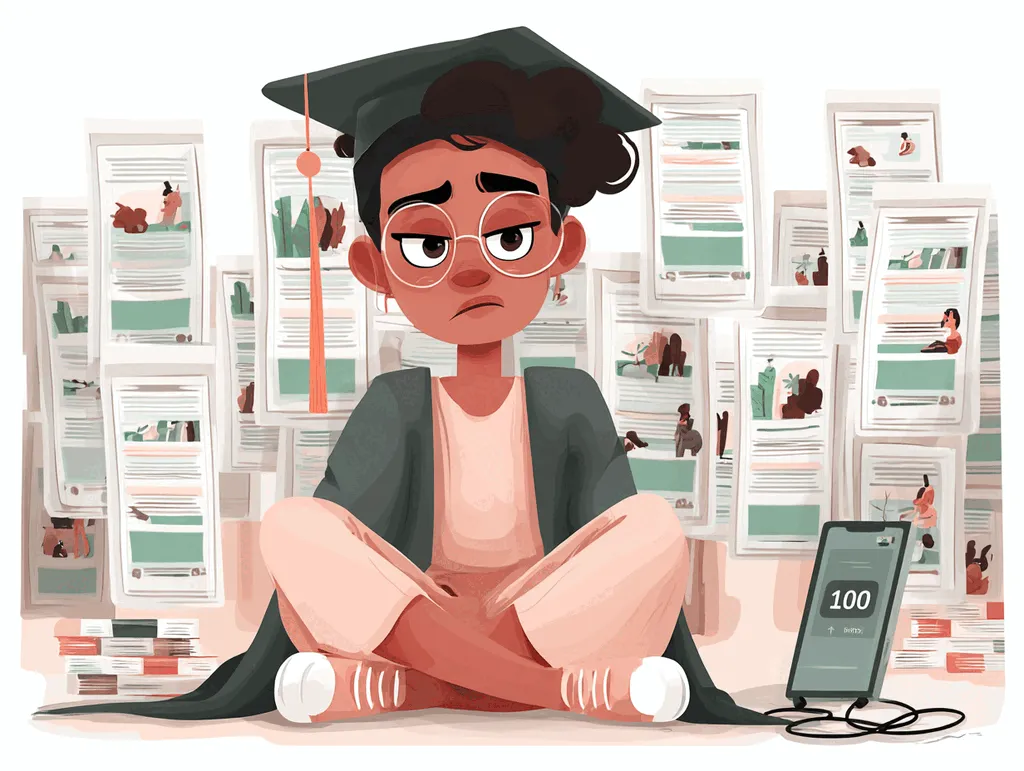
Building it that way wasn’t really my idea, though. Back in early 2024, when ID Atlas was still just something I was kicking around, I kept seeing the same story in those threads. Somebody drops four, five, six thousand dollars on a bootcamp, gets sold the dream (work from home, six figures, none of the classroom stress), and turns up a few months later with a cookie-cutter portfolio that looks like every other graduate’s, a 101 course’s worth of theory, and no callbacks. More confused and more broke than when they started. Bootcamps have taken their lumps since, and mostly earned them, but at the time they were everywhere, and I didn’t want to be another stop on that ride. I really didn’t want to be the guy taking somebody’s last fifty bucks to hand them the same dead end.
That’s kind of where ID Atlas came from, just not wanting to be that. So I built the opposite. You don’t pay me to learn here. I pay you to do actual client work, and you learn the job by doing it.
Two years in, around fourteen people have come through the apprenticeship at varying levels, plus a handful more I’ve coached one-on-one. Seven have already graduated on to bigger and better things: some in full-time roles, some running their own freelance work, and one who built an entire agency of their own that now uses ID Atlas as a model and subcontracts work back to me.
The clearest version of the mission underneath it all is something I wrote down in a DM back in March 2024, to the person this post is about. I told her straight: my job here isn’t to keep you hostage. It’s to help you figure out whether this field is for you, and then help you get into it, or out of it, the moment you know which.
Meet Cherry

Cherry spent about fifteen years in B2B marketing before she ever talked to me, and she was genuinely good at it. In-demand good, the kind of marketer who doesn’t go looking for the next role because the next role comes looking for her.
I was upfront with her from day one. I told her I couldn’t come anywhere close to the $100-plus an hour she was billing for marketing work, and that, honestly, this was going to be a steep pay cut for her. But that didn’t scare her off because she wasn’t in it for the money. She wanted to know whether instructional design was for her, and she was willing to take the hit to find out. That’s a different reason to show up than most people have, and it turns out to be the whole story.
The transferable skills she walked in with
She didn’t come to me empty-handed, either. All those years in marketing had made her someone who could edit video, build an infographic, lay out a brochure, take a messy idea and make it look clean and read clearly. That is not instructional design exactly, but all of it transfers, and transferable skill is the thing I’m actually looking for in a career changer. Not somebody who already knows ID, but somebody who shows up with tools I can point at the work. That’s exactly the kind of resume a hiring manager skims right past for “no direct experience” or the wrong degree, even when everything that matters is sitting right there on the page.
Of course, she wasn’t ready to jump straight onto client projects when she first reached out, and that was fine. I meet people where they are and guide them until they’re ready. But ready has a bar: a portfolio isn’t optional with me, it’s the price of admission. Before we touched a client project she spent time with sample builds, got her hands on the tools, and put together a portfolio I could evaluate. I don’t take it on faith that somebody can do the work, I need to see it. Once I saw what she could do, she came on for live client work.
As she got going on project work, editing video, building eLearning, putting together storyboards, she figured out something fast: hands-on work only takes you so far without some theory underneath it. So one day she came to me with a smart question. Where do I get the real version of this, affordably, without setting money on fire at a bootcamp? Duke had a short online certificate, just a few courses for around four hundred bucks. Low stakes, just enough to dip a toe into the academic side and see whether the theory scratched the same itch. It was the first formal ID coursework she ever did, and as it turned out, the last. She got something out of it, but she found that the work itself was teaching her more.
The Duke certificate was great for textbook knowledge, but ID Atlas gave me the actual mentorship, advice, and real-world practice that you just can’t get from a syllabus.
The classroom tells you what the field is. The work tells you whether you want it.
What’s it like working at ID Atlas?

Cherry was building live courses early on. A stretch of plant identification and vegetation content, a series of animated math explainers for an engineering client, and then a hospitality customer-service module she still talks about as the fun one.
The hospitality customer service project stands out the most for me, mostly because it was a hilarious break from all the plant-related courses I’d been building. I loved the creative development side of it, and the content just made sense to me, so putting it together was a lot of fun.
The way she leveled up wasn’t just me throwing a bunch of projects at her. It was how we worked through them. Especially with new apprentices, I build the first module to set the pattern, then hand off the next one. They draft it, send it to me, and I refine it. Then I put my edited version right next to theirs so they can see exactly what I changed and why.
Seeing your edits side-by-side with my version was a total game-changer. It helped me spot my own flaws and forced me to see better ways of doing things I never would’ve thought of on my own.
You don’t learn this craft from somebody telling you what good looks like. You learn it from watching your own work get better right in front of you. What surprised Cherry was where the hard part actually lived. She figured it would be the tools, the software, the triggers, the technical stuff, but it wasn’t.
Honestly, the hardest part wasn’t the software or the technical side, but the cognitive stuff, like timing. It was a trip trying to figure out how the human brain works in a learning setting, like how long people can pay attention, what keeps them engaged, or what makes them lose patience.
And that right there is the job. Anybody can learn Storyline. What’s hard and what takes repetition and practice to build is the judgment for how an actual person moves through a lesson. Knowing when their attention will slip, what keeps them with you, and what makes them check out. No tool hands you that as part of the subscription fee.
This is where Cherry’s attention to detail really clicked into place. It’s the single hardest thing to hire for, and it’s what makes the biggest difference here, because at ID Atlas you’re handed real client work from day one. That’s the appeal and the pressure. There’s no sandbox, no fake capstone, just deliverables a client is paying for. The flip side is that it has to be good. The math is simple, if a little unglamorous: if I can’t trust your work, QA takes me twice as long as just building it myself, my margin is gone, and I’m the one paying to train you. Cherry had the detail focus and the willingness to learn, and that combination is what took her from no ID experience to one of the most dependable people I’ve gotten to work with.
Graduating Sideways

Most graduation stories run in one direction. Up and in. You finish the program, you land the job, you climb the ladder. Cherry’s ran sideways. She put in her two years, got good at the craft, and then walked out of instructional design altogether. She’s becoming a travel designer.
It’s not that the work got too hard or that she couldn’t hack it. It’s that somewhere in those two years she figured out something about herself that outweighs any skill on the resume.
I realized that while I love creating and learning, I really need to be passionate about the actual topic I’m working on. Moving into travel lets me do that. I wouldn’t totally rule out e-learning development in the future, but if travel is the subject matter, I’m 100% down.
She needs to care about the subject, not just the craft of teaching it. Travel hands her something new to learn every single day, and that’s what lights her up. I’d rather she sort that out now than wind up ten years into a career she fell into because it was the thing in front of her.
Selfishly, I’d have loved to keep her. People who sweat the details like she does don’t come along often, and I’d happily have handed her client work for another five years. But keeping her was never the deal.
So no, this isn’t a story about someone who tried ID and failed. It’s someone who used an apprenticeship to find out, fast and without debt, what she wants to do with her time. That’s a win. It’s also the whole point of ID Atlas. We’re a launchpad to wherever you want to go, not a ceiling you get stuck under.
Chase what you love, not the dream
Long before instructional design, Cherry had already learned one entire career by doing it instead of studying it. When she started in marketing, half the job didn’t exist yet and there were no classes to take, so she just did the work and figured it out.
Because of that background, I’m always going to vote for an apprenticeship over a classroom.
She ran ID the same way. Learned it by doing, then used what she learned to aim herself somewhere better.
Instructional design is genuinely hard to do well if you don’t love it. You can coast through a lot of jobs, but not this one. All the cognitive stuff Cherry was describing, the timing and the attention and the patience, none of it shows up unless you care enough to sweat the details. An apprenticeship is the best way to find out whether you’ve got that kind of care for this particular craft, before you bet your life on it.
The bootcamp model sells you a course and a dream, then sets you loose to learn on your own, build a portfolio on your own, and go fight for a job on your own. In our apprenticeship model, you learn the work by doing the work, next to somebody who’s already done it, and you’re not alone while you figure it out. One is a transaction, the other is a relationship.
Maybe it’s not a great business model, though. Constant onboarding is a drag on any shop. Every time somebody gets good and moves on, I’m back to training the next person instead of cashing in on the last. The “smarter” play is to hire seasoned IDs, lock them in, and protect the margin. But that was never what this was for.
ID Atlas is mission-driven, and that mission shows up in who we build for, too. We work with small businesses, start-ups, nonprofits, and higher ed. The budgets are smaller and the timelines are tighter, so the work has to be sharp and we have to stay agile, but these are the places where one good course changes something. The people I want to build up and the organizations I want to build for have a lot in common. Both are easy to underestimate, and both are exactly who I started this for.
If you’re weighing a jump into ID like Cherry’s, she’s been exactly where you are, so I’ll let her take it from here.
Just dive straight into it. A structured curriculum is nice to back you up, but being hands-on is where it’s at. The learning curve is way steeper, but you get so much more real experience out of it.
Can’t say it better than that. Congrats, Cherry. Travel is lucky to have you.