
ID Case File #6
The Professor's Legacy
August 25, 2025
Axiom University's most prestigious faculty program is now its most hated, and its legendary professor is fiercely protective of it. Which blend wins his buy-in? An instructional design case study on stakeholder analysis and change management.
The Dilemma

We’ve been tasked with redesigning Axiom University’s most prestigious, and now most hated, faculty development program. We have a real chance of seeing Dr. Emerson Thorne’s legacy go from university MVP to the most disliked person on campus.

It’s the mandatory certification on ‘The Socratic Inquiry Method,’ Axiom’s signature teaching philosophy. It’s led by the legendary Dr. Thorne, the emeritus professor who literally wrote the book on it. For decades, his in-person, half-day workshops were rites of passage for new faculty.
During the pandemic, the workshop was shifted to a 4-hour synchronous Zoom session. It was tolerated during the crisis, but now it’s a disaster, especially since it’s held in late May when faculty are exhausted and about to go on vacation for the summer.
Here’s a taste of some of the feedback the program has received in the last few sessions:
I get that this content is important, but four hours of Zoom lecture is a waste of our time. This could have been a 60-minute video played at 2x speed.
The irony of a mandatory session on pedagogy violating every principle of good online teaching was not lost on us. It’s embarrassing for the institution.
Four hours on Zoom in late May is brutal. The fatigue is real. I’ll be honest, I had my camera off and was multitasking just to get through it.
A four-hour monologue. Even when the chat had a thoughtful question, it was completely ignored. Like shouting into the void.
This session models the exact opposite of what we are supposed to be doing in our own classes. This could have been an email with a link to his book.

The Provost’s office has two problems: first, the terrible feedback is a reputational black eye. Second, pulling the entire faculty offline for a full half-day in May is a massive productivity loss. To honor Thorne’s contributions, the Provost has agreed to develop a hybrid solution, but we have some flexibility in what that looks like. We could suggest a traditional 50-50 split, or opt for a more aggressive 90-10 split and push most of the content online to free up more faculty time.
The real challenge remains Dr. Thorne himself. He’s the master of the content but deeply defensive. Our task is to choose the right blend and design a strategy that respects his expertise while solving these very real engagement and logistical problems. We’ve also got to get him on board with whatever format we take which will take a masterful blend of data, diplomacy, and a compelling vision for his future role.
The Decision
Which is the better strategic approach: investing in coaching the person with a 50/50 blend or redesigning the format into a 90/10 blend?
Which blend do you propose, and how do you pitch it to Dr. Thorne?
50/50 Blend
Approximately 2 hours of Dr. Thorne's foundational theories are converted into a polished, self-paced asynchronous prerequisite. This is followed by a 2-hour live, interactive workshop on Zoom. This will require a significant investment in coaching Dr. Thorne. You will work with him as a peer to redesign his live session from the ground up, introducing modern virtual facilitation techniques like structured breakout rooms for Socratic practice, integrated polling, and a moderated Q&A. The goal is to make the 2-hour live session an exemplar of virtual pedagogy as well as the Socratic method.
See What Happens
You schedule the meeting with Dr. Thorne, determined to approach him as a collaborative partner. Your strategy is to find common ground on the frustrations of the online medium.

You start by asking, "Dr. Thorne, before we dive in, can I ask how you feel about the 4-hour Zoom format? We're hearing so much about faculty burnout, and I have to imagine it's an exhausting experience for you as well."
He softens slightly, admitting, "It is draining. In person, you can feel the energy in the room, see the spark of an idea taking hold. Online, it's a void. The entire Socratic method is predicated on presence, on reading a room. You can't have a true dialogue when you're staring at a grid of black boxes." He leans back, a note of frustration in his voice. "And frankly, I find all these new-fangled tools, the chatterbox, the little clicker-polls, to be a distraction from the intellectual rigor of the content. They feel... frivolous. I wish we could simply bring it back in-person."
Seizing the opening, you say, "That's exactly what the data shows. The faculty are struggling to connect with your brilliant content through this specific medium. What if we worked together to redesign the live session? We could keep a 2-hour live component, focusing only on your most powerful stories and turning them into interactive case studies. We could be your partners in mastering this new stage."

Dr. Thorne stiffens, his back straightening against his chair. The slight warmth that had entered the conversation vanishes completely.
"I appreciate the sentiment," he says, his voice losing its earlier weariness and becoming cool and formal. "But let me be perfectly clear. I do not need a 'coach.'" He picks up a pen from his desk, turning it over in his fingers. "My methods are sound. I have been teaching this material, and teaching it well, for over twenty years. The suggestion that I need a 'partner' to 'master a new stage' implies that I am somehow failing in my competence. I can assure you, that is not the case."
Dr. Thorne reluctantly agrees to the 2-hour format but rejects any meaningful collaboration on the design. The resulting workshop is simply a shorter, 2-hour lecture. You've officially moved the needle from 'furious' to 'unimpressed.' The Provost's office is calling it a 'frustrating compromise.' Thorne agreed to the shorter time, but he shut down every attempt to co-design the session. He wouldn't even consider a moderated Q&A. So you solved the logistical problem, the faculty gets two hours of their life back, but you failed on the engagement front. The bet on coaching the person failed because the person wasn't truly willing to be coached.
90/10 Blend
The vast majority of the content (over 3.5 hours' worth) is converted into a rich, self-paced asynchronous course. This includes high-quality videos of Dr. Thorne, interactive scenarios, and peer discussion boards. This path requires a significant investment in instructional design and media production. The mandatory live component is reduced to a 30-minute, high-status "Expert Q&A" with Dr. Thorne. Faculty submit questions in advance after completing the course, and a skilled moderator facilitates the session. Dr. Thorne no longer has to manage a group; he just has to show up and be the revered expert.
See What Happens
You schedule the meeting with Dr. Thorne, determined to frame the redesign as a way to honor and preserve his legacy. You begin with the shared problem, but frame it differently. "Dr. Thorne, the feedback is clear that the 4-hour Zoom format is causing fatigue, and it's starting to tarnish the reputation of your brilliant work. Our primary goal here is to protect your legacy. What if we could capture your brilliance in a definitive, on-demand format that cements your legacy at Axiom forever?"

He looks intrigued, but skeptical. "What do you mean?"
"What if we created a state-of-the-art asynchronous course from your work? It would become a lasting asset for the university, used for years to come. Then, your live role would be transformed into a 30-minute 'Expert Q&A', no prep, no managing breakout rooms, just you, a moderator, and the faculty's best questions. It's a way to honor your status without the exhausting 4-hour grind."
"So you're saying that my work would be preserved, and I would only need to show up for a short, high-level discussion on Zoom?"
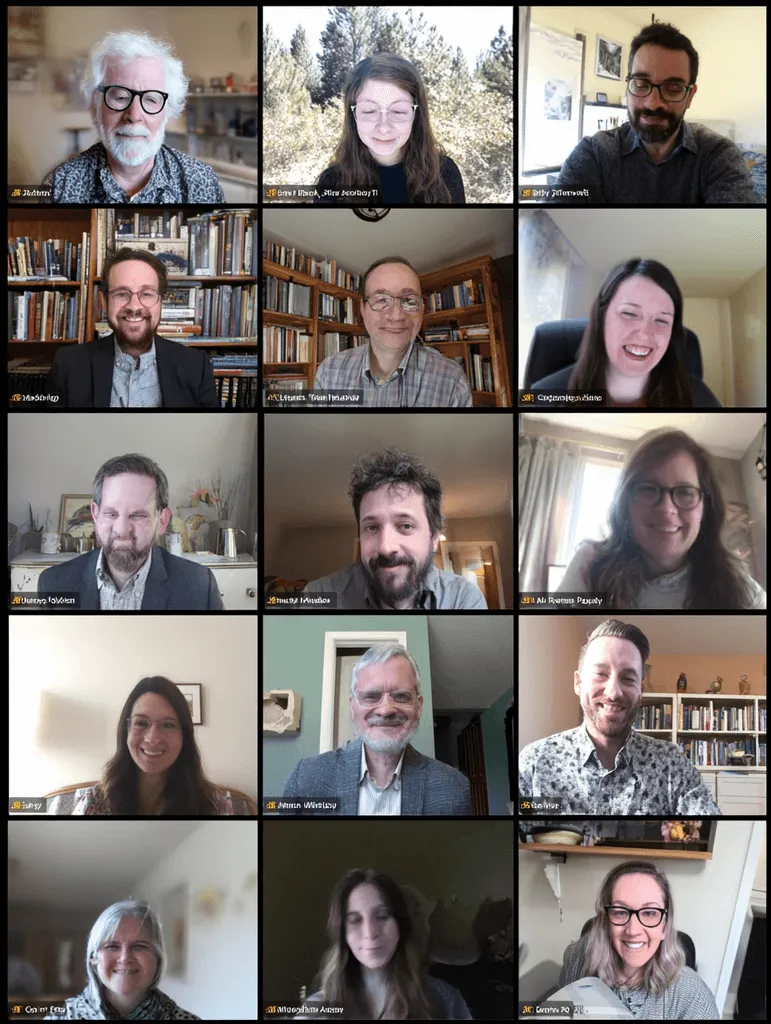
You confirm this is the plan. A slow nod from Thorne. You see the tension in his shoulders relax for the first time in the meeting. He leans back in his chair, looking not at you, but out the window, a faint, thoughtful smile forming as he processes the idea of getting the prestige without the pain.
The Provost calls the new 'Thorne Certification' a resounding success. The faculty feedback is glowing, they love the flexibility, and they're raving about the 30-minute 'Ask the Expert' session. It's become a can't-miss event. Dr. Thorne was more involved than expected. Once he realized you were trying to showcase his work, not erase it, he became a fantastic partner. He personally curated the case studies for the asynchronous portion and was in his element during the video recordings.
Recognizing that he was also fatigued with Zoom was the key. You found a solution that let him continue to be the expert, with far less stress. At the end of the Q&A session a dozen faculty members stay on past the 30 minutes just to ask him follow-up questions.
The Debrief

This scenario highlights one of the most difficult and valuable skills a consultant can possess: stakeholder analysis. Your choice of which approach to take was not about a right or wrong design model (both the 50/50 and 90/10 blends are valid and could work in various circumstances), but about correctly diagnosing the complex motivations of your key stakeholder, Dr. Thorne.
The outcome was determined not by the quality of the solution, but by the quality of the pitch. Let’s break down why one approach failed and the other succeeded.

The 50/50 blend relied on coaching Dr. Thorne. This approach is a fundamentally sound and often successful strategy. The techniques used (leading with empathy, finding common ground, and reframing data) are essential tools in any change agent’s toolkit.
This path failed because it misjudged the stakeholder’s core identity. The attempt to create a partnership was perceived as a critique of his competence. Let’s break down the strategies used in this approach:
Find Common Ground
This is a classic de-escalation technique used to build rapport before delivering bad news. The goal is to align with the stakeholder against a shared enemy, in this case, the frustrating online format.
Dr. Thorne, before we dive in, can I ask how you feel about the 4-hour Zoom format? We’re hearing so much about faculty burnout, and I have to imagine it’s an exhausting experience for you as well.
This was a great approach to begin the conversation and actually set you up to succeed. Dr. Thorne responded with surprising candor, lowering his defenses and admitting his own deep frustrations with the online format. This empathetic opening successfully created the opening needed to discuss a new solution and proved that he was, on some level, aware that the current situation was untenable.
Reframe the Data
After he admits his own frustration, the negative feedback is presented not as a failure of his teaching, but as proof that the medium is failing his brilliant content. This validates his expertise while confirming the problem.
That’s exactly what the data shows. The faculty are struggling to connect with your brilliant content through this specific medium.
By immediately connecting the negative data to Dr. Thorne’s own expressed frustration, you transform the feedback from a personal attack into objective evidence that supports his feelings. The key phrase, “through this specific medium,” isolates the problem, making the “enemy” the technology, not the person. This move simultaneously validates his expertise (“your brilliant content”) while confirming the problem’s severity. It allows him to agree with the data without admitting personal failure, turning a potential point of conflict into a moment of shared understanding.
Offer Partnership
The proposed solution is framed as a collaborative effort to help him “master a new stage.” While well-intentioned, the execution of this strategy was the thing that caused him to shut down the conversation.
What if we worked together to redesign the live session?… We could be your partners in mastering this new stage.
The offer to be “partners in mastering this new stage” was meant to be collaborative and supportive. However, for a proud, senior expert like Dr. Thorne, the language implied a deficit. You don’t help a master “master” something; the suggestion itself is an unintentional critique. This offer directly collided with his sense of identity and status as the university’s foremost authority on the topic. It was perceived not as an offer of support, but as a condescending challenge to his competence, which immediately triggered his defensiveness and shut down the conversation.
The strategy failed for one reason: it was a mismatch for this specific stakeholder. The offer to “partner in mastering a new stage” collided directly with Dr. Thorne’s core identity. For a man whose entire career was built on being a master teacher, the suggestion that he needed coaching, no matter how diplomatically phrased, was perceived as a fundamental insult to his competence.
A strategy, no matter how good, will fail if it threatens a stakeholder’s sense of identity. Without a long-term, high-trust relationship, attempting to “coach” a proud and defensive expert is an extremely high-risk approach.

The 90/10 blend relied on convincing Dr. Thorne to give up his longer-form live lectures and record them instead. Changing the format like this also carried a huge risk. Presenting a radical redesign could have easily been seen as a disrespectful attempt to sideline Dr. Thorne and erase his legacy.
This strategy mostly succeeded because it was based on a critical insight: Dr. Thorne was also suffering from Zoom fatigue. The pitch correctly hypothesized that his resistance was a mix of pride and personal exhaustion. The conversation was carefully framed to appeal to both of these drivers.
Appeal to a Higher Value
Instead of focusing on the process, the pitch immediately frames the bad news as a direct threat to his reputation. This shifts the conversation from “your methods are failing” to “let’s work together to protect the important thing you’ve built.”
Dr. Thorne, the feedback is clear that the 4-hour Zoom format is causing fatigue, and it’s starting to tarnish the reputation of your brilliant work. Our primary goal here is to protect your legacy.
This is a sophisticated reframing technique. Instead of criticizing Dr. Thorne’s methods, this strategy bypasses his defenses by focusing the conversation on a higher value that you both can agree on: protecting his legacy. The key to this approach is that it transforms you from an adversary into an ally. The bad news isn’t presented as his fault, but as an external threat that is actively “tarnishing the reputation of his brilliant work.” By immediately stating, “Our primary goal here is to protect your legacy,” you position yourself on his side of the table, working with him to defend against a common enemy.
Present a “Win-Win” Vision
The proposed solution is not just a redesign; it’s a compelling vision of a better future specifically for him. It simultaneously addresses his two biggest drivers: his ego and his exhaustion.
What if we could capture your brilliance in a definitive, on-demand format that cements your legacy at Axiom forever?… your live role would be transformed into a 30-minute ‘Expert Q&A’… It’s a way to honor your status without the exhausting 4-hour grind.
This pitch was successful because it offered him a “win-win”: he gets to cement his status as a timeless expert (appealing to his ego) while being relieved of the difficult and tiring work of a long virtual session (appealing to his fatigue). It was a solution that made his life easier while making him look even better.
This strategy answers the unspoken question on every stakeholder’s mind: “What’s in it for me?” After appealing to the higher value of legacy, this pitch presents a vision that is not a compromise, but a direct upgrade to Dr. Thorne’s current situation. It addresses his two primary drivers, one stated, one unstated:
- It Appeals to His Ego: The language of “cements your legacy” and “honor your status” assures him that he is not being sidelined, but elevated.
- It Solves His Unstated Problem (Exhaustion): The phrase “without the exhausting 4-hour grind” is the key. It acknowledges his personal pain and offers relief, a solution he was unlikely to ask for himself but desperately wanted.
The solution is framed as Prestige without the Pain. By making the change feel like a personal benefit rather than a professional critique, it transforms a potential obstacle into an enthusiastic partner.
The Bottom Line
Let’s be clear: the legacy protection pitch that succeeded here was a high-stakes gamble. Dr. Thorne could have easily seen it as a condescending attempt to put him “out to pasture.” If his primary motivation had been the hands-on act of teaching itself, rather than his status and hidden fatigue, this approach would have backfired spectacularly. Conversely, the coaching strategy that failed here might well be the perfect approach in a different context. Had Dr. Thorne been a younger, growth-minded professor who was genuinely frustrated by his lack of technical skill, the offer of a collaborative partnership would have been seen as supportive and empowering. The strategy itself wasn’t flawed; it was simply the wrong prescription for this particular “patient.”
The ultimate lesson here is that in stakeholder management, diagnosis must always precede the prescription. There is no universally “correct” strategy; there is only the right strategy for the specific person in front of you. Your responsibility as a consultant isn’t just to have a toolkit of persuasive techniques like reframing data or presenting a win-win. It’s to develop strategic empathy, the ability to look past the surface-level problem and accurately diagnose a stakeholder’s true drivers, fears, and unstated needs. Before you can choose the right frame, you must first understand the person. That deep analysis is the difference between a frustrating compromise and a resounding success.
Community Insights
Real-world feedback from instructional design practitioners polled on LinkedIn, Reddit, and ID forums such as ONILP and Useful Stuff.
of polled professionals advised to reimagine the format with a 90/10 blend.
- 90/10 Blend 78%
- 50/50 Blend 22%
A decisive 78% majority preferred the 90/10 Blend, with comments consistently noting that coaching was unlikely to succeed given the professor's defensiveness and reluctance to change. The dominant viewpoint was that the 90/10 approach would minimize friction, leverage his expertise, and offer a practical path forward, even if neither option fully resolves the underlying personality challenges.
Featured comments